Deprecated: Creation of dynamic property WP_Term::$cat_ID is deprecated in /home/undercurrents.nl/web/undercurrents.nl/public_html/wp-includes/category.php on line 378
Deprecated: Creation of dynamic property WP_Term::$category_count is deprecated in /home/undercurrents.nl/web/undercurrents.nl/public_html/wp-includes/category.php on line 379
Deprecated: Creation of dynamic property WP_Term::$category_description is deprecated in /home/undercurrents.nl/web/undercurrents.nl/public_html/wp-includes/category.php on line 380
Deprecated: Creation of dynamic property WP_Term::$cat_name is deprecated in /home/undercurrents.nl/web/undercurrents.nl/public_html/wp-includes/category.php on line 381
Deprecated: Creation of dynamic property WP_Term::$category_nicename is deprecated in /home/undercurrents.nl/web/undercurrents.nl/public_html/wp-includes/category.php on line 382
Deprecated: Creation of dynamic property WP_Term::$category_parent is deprecated in /home/undercurrents.nl/web/undercurrents.nl/public_html/wp-includes/category.php on line 383

Deprecated: Creation of dynamic property WP_Term::$cat_ID is deprecated in /home/undercurrents.nl/web/undercurrents.nl/public_html/wp-includes/category.php on line 378
Deprecated: Creation of dynamic property WP_Term::$category_count is deprecated in /home/undercurrents.nl/web/undercurrents.nl/public_html/wp-includes/category.php on line 379
Deprecated: Creation of dynamic property WP_Term::$category_description is deprecated in /home/undercurrents.nl/web/undercurrents.nl/public_html/wp-includes/category.php on line 380
Deprecated: Creation of dynamic property WP_Term::$cat_name is deprecated in /home/undercurrents.nl/web/undercurrents.nl/public_html/wp-includes/category.php on line 381
Deprecated: Creation of dynamic property WP_Term::$category_nicename is deprecated in /home/undercurrents.nl/web/undercurrents.nl/public_html/wp-includes/category.php on line 382
Deprecated: Creation of dynamic property WP_Term::$category_parent is deprecated in /home/undercurrents.nl/web/undercurrents.nl/public_html/wp-includes/category.php on line 383
Season Butler (SB): I think we dealt with this by approaching the whole project as being in a constant state of becoming. We didn’t have an idea and then seek to realise it. It has been constantly unfolding, which is exciting because we are both participants and observers.
Jenny Wolka (JW): Exactly. I think for us it is very clear that this was also the first chapter in experimenting with a new type of collectivity that we started to develop during our Commonplace meetings in Berlin over the summer of 2018. This is a process that takes a lot of time, so in a way what is observable in the exhibition is a studio situation, that somehow got translated to a public space.
Clemens Leuschner (CL): For me many of our processes and discussions come together in the show quite clearly though. I think for instance about how Aiko’s sushi workshop during Commonplace in Berlin questioned the notion of tradition or the status quo of a working system. This is not only related to her own work but also to some of the other works in the show, for instance the Transkutir text which you can read while listening to Leo’s soundtrack. His sound piece makes me think about one of his lectures during Commonplace on Afro Rhythmic Mutations in the Americas. In my mind I hear Judith reading the Cosmic Manifesto out loud while being interrupted by the staccato sound of Season’s typewriter. With every sentence the balloon rises a bit higher. She tries hard to follow the words, but cannot grasp all of them; something gets lost in the space of the invisible, poetic and violent borders of translation. The images of the baskets by Coletivo Kókir fluctuate between ‘useful’ objects and ‘just’ artworks, as I come through the leaves of Luz’s Poetic Borders to the ‘end’ of the world. While listening to some sad British tourist being afraid of robbers stealing the end of her land, of the nation she loves, I think about European borders, where nobody gets in anymore, nothing gets out. It´s like the science fiction script Esper talked about during Commonplace – and I find myself standing next to the wall in front of a poster by him and Maurits, which depicts a sad ‘raising star’ of Europe. And this is just one walk through the show, not even describing all of the works…
JW: Which brings us to another question; a question that is inherent to any contemplation about conceiving a show, as a presentation of something to a possible audience. How do you translate thoughts and sensations into dialogues between the pieces in the show, and finally how do you communicate this to someone else? Maybe that is why we decided to install a collage of audio recordings in the entrance of HMK, so that by walking up the staircase the visitors could listen to our different voices before even entering the show. The collage consists of cut-out phrases from the discussions we had during Commonplace, when we started to invite fellow artists and thinkers to join our ongoing talks, and which is really the basis of the whole project. This audio-collage reflects somehow on the underlying desire for creating something new out of the transmission of ideas.
Judith Lavagna (JL): Yes, because we also opted for the title Notes from a trembling community in a willful state of flux to show that the whole project reflects on the processes of a collaborative research which is still ongoing but paradoxically finds its form in an exhibition. We were very conscious about the limits or fragilities of translating this research, and so we tried to find a form of display that reflects on its own making. Furthermore we aimed to break with some exhibition standards, for example by using the concept of the archipelago as a way to let works overlap and interact, which was particularly challenging because of the multiple languages and materials used. The experience of making this exhibition kept us open to the friction the different works in the exhibition could bring. New works were produced or commissioned but we also brought existing artworks, texts, and sound pieces. At the risk of ‘freezing’ the discussion by exhibiting, we looked for a way to keep a conversation going.
JW: But all of this has only been an entry to the readings of Glissant which we now have to explore deeper because we are really just touching the surface. For example, there is this poetic approach in the exhibition at Hotel Maria Kapel, but there’s also always a political approach with Glissant. The danger might be to approach Glissant on this poetic level and forget where he’s really coming from. How are the very complex ideas of Glissant translated into this show? Because maybe there is a breach between Glissant’s very anti-colonial context and some of the poetic thoughts. This space in between I find very interesting and that should be developed further.
IdC: We’ve also really tried to embrace the idea of opacity, another key concept of Glissant’s thinking. Simply put, opacity is the opposite of transparency. Glissant thinks we should embrace the untranslatable and unknowable and sees this opacity as a way to challenge and subvert systems of power. He demands a ‘right to opacity’ and calls for an understanding and accepting of difference without measuring this difference to an ‘ideal scale’, comparing it or making judgments. For me it has been a personal struggle to put this into practice because of how I’ve been conditioned to approach critical thought and exhibition making.
JW: Of course, but it can also be easy to hide in this idea of opacity. In Glissant’s sense I find it very appealing, but in the context of art it is sometimes used as an easy way out.
SB: I really agree with that. Glissant’s idea of opacity was grounded in our [people of colour’s] right not to explain ourselves, not to have to give account of ourselves. That’s the only way I can really reconcile what Glissant says about borders, which is one of my sticking points with his philosophy. I think the idea of poetic, permeable borders is quite naive because borders are the site of violence, borders are the lines that are drawn when you are Othered, and the ability to permeate borders is exactly social privilege. And so being able to have opacity and not have to explain why you want to cross a border but just being able to cross, that’s our privilege in some ways. But then also I think we were trying to unpick something opaque and find out how it worked in Oliver’s performance score, for example. That was a moment of testing the relevance of opacity, where it applies and where it’s not useful.
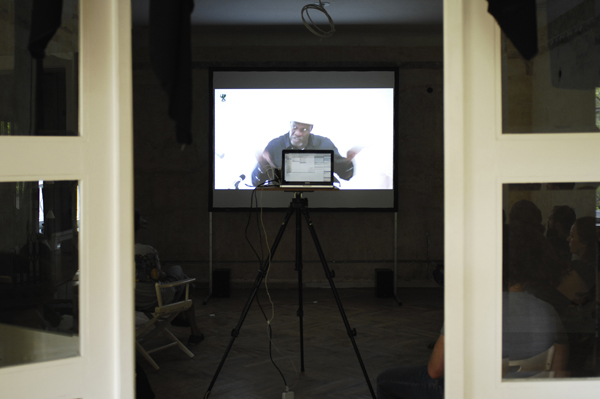
IdC: I also find it difficult to understand what Glissant’s point is with borders. He says borders should not be dissolved, but that our mindset about them should change. It is a very idealistic way of seeing a border not as a instrument of control and power – which it is – but as a way to maintain difference, or ‘different flavours’ as I believe he says in the film One World in Relation by Manthia Diawara which we screened a few days before the opening. But our way of thinking about borders, geography, and nation states is so much tied to privilege as you say Season, and with that power and control, that I don’t believe it is something we can easily overcome. That’s why I find the Land’s End work in the show so enticing while thinking about these things. Mahony took the most western part of England and people are so uncomfortable with that, even afraid that something is being taken from them… while of course it is just a rock that has no inherent meaning besides the one we give it. In that sense the opacity that is intrinsic in art really works to deal with these complex issues.
Originally published in Studio Note #9 (December2018), Hotel Maria Kapel (HMK) (download here)
Image: Mahony & Gerald Mandl, Land’s End, stone and sound piece 6’3”, 2018
Deprecated: Creation of dynamic property WP_Term::$cat_ID is deprecated in /home/undercurrents.nl/web/undercurrents.nl/public_html/wp-includes/category.php on line 378
Deprecated: Creation of dynamic property WP_Term::$category_count is deprecated in /home/undercurrents.nl/web/undercurrents.nl/public_html/wp-includes/category.php on line 379
Deprecated: Creation of dynamic property WP_Term::$category_description is deprecated in /home/undercurrents.nl/web/undercurrents.nl/public_html/wp-includes/category.php on line 380
Deprecated: Creation of dynamic property WP_Term::$cat_name is deprecated in /home/undercurrents.nl/web/undercurrents.nl/public_html/wp-includes/category.php on line 381
Deprecated: Creation of dynamic property WP_Term::$category_nicename is deprecated in /home/undercurrents.nl/web/undercurrents.nl/public_html/wp-includes/category.php on line 382
Deprecated: Creation of dynamic property WP_Term::$category_parent is deprecated in /home/undercurrents.nl/web/undercurrents.nl/public_html/wp-includes/category.php on line 383
‘Buitengaats offers an overview of the international activities of cultural organizations and artists from the Netherlands. It is also an important source for statements about the international scope of art and culture from the Netherlands.’
‘In Buitengaats we record performances, tours, shows, exhibitions, loans, publications, workshops, residencies and screenings. The oldest activities in Offshore date from 1999.’
Source and database (in Dutch): https://dutchculture.nl/nl/buitengaats
More information in English: https://dutchculture.nl/en/netherlands-cultural-export-2016
Deprecated: Creation of dynamic property WP_Term::$cat_ID is deprecated in /home/undercurrents.nl/web/undercurrents.nl/public_html/wp-includes/category.php on line 378
Deprecated: Creation of dynamic property WP_Term::$category_count is deprecated in /home/undercurrents.nl/web/undercurrents.nl/public_html/wp-includes/category.php on line 379
Deprecated: Creation of dynamic property WP_Term::$category_description is deprecated in /home/undercurrents.nl/web/undercurrents.nl/public_html/wp-includes/category.php on line 380
Deprecated: Creation of dynamic property WP_Term::$cat_name is deprecated in /home/undercurrents.nl/web/undercurrents.nl/public_html/wp-includes/category.php on line 381
Deprecated: Creation of dynamic property WP_Term::$category_nicename is deprecated in /home/undercurrents.nl/web/undercurrents.nl/public_html/wp-includes/category.php on line 382
Deprecated: Creation of dynamic property WP_Term::$category_parent is deprecated in /home/undercurrents.nl/web/undercurrents.nl/public_html/wp-includes/category.php on line 383
Deprecated: Creation of dynamic property WP_Term::$cat_ID is deprecated in /home/undercurrents.nl/web/undercurrents.nl/public_html/wp-includes/category.php on line 378
Deprecated: Creation of dynamic property WP_Term::$category_count is deprecated in /home/undercurrents.nl/web/undercurrents.nl/public_html/wp-includes/category.php on line 379
Deprecated: Creation of dynamic property WP_Term::$category_description is deprecated in /home/undercurrents.nl/web/undercurrents.nl/public_html/wp-includes/category.php on line 380
Deprecated: Creation of dynamic property WP_Term::$cat_name is deprecated in /home/undercurrents.nl/web/undercurrents.nl/public_html/wp-includes/category.php on line 381
Deprecated: Creation of dynamic property WP_Term::$category_nicename is deprecated in /home/undercurrents.nl/web/undercurrents.nl/public_html/wp-includes/category.php on line 382
Deprecated: Creation of dynamic property WP_Term::$category_parent is deprecated in /home/undercurrents.nl/web/undercurrents.nl/public_html/wp-includes/category.php on line 383
In the coming and going of our experiences between America and Europe the mestizaje appears less as a diffuse identity, but rather as an act of transparency, whose unit is the “in-between”. By crossing the paths of the “in-betweens” we get to the founding principles of modernity: nature-culture, subject-object, us-them. These oppositions are deployed in others, such as “human” and “non-human”, people and things, sign and world, science and art, matter and spirit, life and death. The task of this coming and going between these “inbetweens” is not to abolish the dichotomies, but to iridesce, to diffract and to erode them into oblivion. Thus it would not be a matter of redefining the defined, but of in-defining it for its final un-definition. It is a movement from an umdeuten to an undeuten of the Bedeutung, in order to arrive at an Andeutlichkeit; a play with the texture of the meaning, which is an opportunity to call on the not-yet-appeared: the ever-arriving.
Beginning with an exercise of transparent falsification, it starts to self-energise an aesthetic-cognitive principle: the transkutir. This mestizo concept is composed of the AymaraQuechua term “kuti” and the Latin-based prefix “trans-” of, for example, transition, transformation, or translation. Both elements sedimented along their traditions a sense of change, movement, upending and dynamics over time. In this process of mestizaje, individual identities are diluted through a form of cannibal metanoia or nooifagia. With differing origins and perspectives on their very meanings, that are rooted in various Weltanschauungen, cosmovisions or imayna rikuna panti, the mestizaje that emerges from “trans-” and “kuti” aims to (ex)cavate the traditions and to create (poiein) aesthetic-cognitive processes of reversion and inversion that disentangles and expose the tradition and the idea of tradition. In this way, its heritage appears more as an inversion than as a treasure. Transkutir recovers two ways of conceiving the upending and the transformation in order to generate its mestizo re-cognition: to return in altering and to alter in returning.
March 2015
Cruz del Sur
Text by Tomás Bartoletti (translated by Jenny Wolka)
This text on the neologism „transkutir“ is the product of a series of meetings under the name Cruz del Sur, which took place in the beginning of 2015 in the studio of Mahony Collective, Berlin.
Originally convened by Tomás Bartoletti, David Magnus, Pablo Rojas and Jenny Wolka, artists, curators and academics participated in these meetings, creating a platform for the exchange of ideas and a critical space for artistic practices whose topics were linked to the construction of Otherness and post-colonial aesthetics. The dynamics of these meetings were also based on the exploration of cross-cultural dialogic forms and problems of their translatability.
In July 2015 a conference paper entitled Transkutierte Antike: lateinamerikanische Perspektiven der Altertumswissenschaften with the theoretical development of the concept of “transkutir” was presented by Tomás Bartoletti at Humboldt-Universität, Berlin.
Click here to read the original version of this text in Spanish
Image: Tomás Bartoletti & Mahony i.c.w. David Magnus & Pablo Rojas, Transkutir, mixed media installation, 2015-2018 (detail). Photo by Sanna Gertenbach
The mixed media installation Transkutir is part of the group exhibition Notes from a trembling community in a wilful state of flux held at Hotel Maria Kapel between 7 September and 20 October 2018.
]]>Deprecated: Creation of dynamic property WP_Term::$cat_ID is deprecated in /home/undercurrents.nl/web/undercurrents.nl/public_html/wp-includes/category.php on line 378
Deprecated: Creation of dynamic property WP_Term::$category_count is deprecated in /home/undercurrents.nl/web/undercurrents.nl/public_html/wp-includes/category.php on line 379
Deprecated: Creation of dynamic property WP_Term::$category_description is deprecated in /home/undercurrents.nl/web/undercurrents.nl/public_html/wp-includes/category.php on line 380
Deprecated: Creation of dynamic property WP_Term::$cat_name is deprecated in /home/undercurrents.nl/web/undercurrents.nl/public_html/wp-includes/category.php on line 381
Deprecated: Creation of dynamic property WP_Term::$category_nicename is deprecated in /home/undercurrents.nl/web/undercurrents.nl/public_html/wp-includes/category.php on line 382
Deprecated: Creation of dynamic property WP_Term::$category_parent is deprecated in /home/undercurrents.nl/web/undercurrents.nl/public_html/wp-includes/category.php on line 383
The philosopher, writer, and poet Édouard Glissant is considered a forerunner of thinking on globalization and a world of diversity and interrelations. Of particular importance has been his theory of the ‘Poetics of Relation’ in which he uses the concepts of ‘Relation’ and ‘Tout-monde’ to meditate on the new meanings of globalization, chaos, violence, equality and justice.
In the documentary film Édouard Glissant: One World in Relation filmmaker Manthia Diawara accompanies Glissant aboard the Queen Mary II on a transatlantic journey from Southampton, England to New York City as he speaks about his life and work. This poetic meditation continues during a voyage to Glissant’s native Martinique as the filmmaker and thinker explore our understanding of relation and the theory of globality as a continual process of relating.
Wednesday 5 September, 2018
Duration: 50 minutes
Language: French with English subtitles
Deprecated: Creation of dynamic property WP_Term::$cat_ID is deprecated in /home/undercurrents.nl/web/undercurrents.nl/public_html/wp-includes/category.php on line 378
Deprecated: Creation of dynamic property WP_Term::$category_count is deprecated in /home/undercurrents.nl/web/undercurrents.nl/public_html/wp-includes/category.php on line 379
Deprecated: Creation of dynamic property WP_Term::$category_description is deprecated in /home/undercurrents.nl/web/undercurrents.nl/public_html/wp-includes/category.php on line 380
Deprecated: Creation of dynamic property WP_Term::$cat_name is deprecated in /home/undercurrents.nl/web/undercurrents.nl/public_html/wp-includes/category.php on line 381
Deprecated: Creation of dynamic property WP_Term::$category_nicename is deprecated in /home/undercurrents.nl/web/undercurrents.nl/public_html/wp-includes/category.php on line 382
Deprecated: Creation of dynamic property WP_Term::$category_parent is deprecated in /home/undercurrents.nl/web/undercurrents.nl/public_html/wp-includes/category.php on line 383
With his book Poetics of Relation (1990) Glissant offers us a tool to reimagine the most pertinent questions of our time. ‘Instead of fixed places of origin, he offers sites of connectivity, where multiple histories and ways of being can coexist. Instead of roots, he offers the dynamic process of creolization, a poetics defined by its openness to transformation. Instead of a world of nations, he offers the archipelago, an image of the world in which we are all connected while remaining distinct.’[1] One of the guiding principles in Glissant’s thinking, as well as this exhibition, is the concept of opacity (opacité). Opacity, unlike transparency, welcomes the untranslatable and unknowable. Glissant claims a ‘right to opacity’ and invites people to accept that which they don’t understand.
Notes from a trembling community… experiments with different modes of relation and production through working collaboratively, and reimagining the process of exhibition making. The starting point for the project lies in a residential house in Berlin where a fluctuating group of artists, social scientists, children, musicians, curators, workers and thinkers came together last July. Here, starting with the organising principle of a daily meal together, they inaugurated a process of research into the poetic borders distinguishing and connecting them. Since then the invitation to contribute has been opened up further to a wider network of friends and like-minded people across the globe.
The installation at HMK is not meant as the final stage of the project, but as another phase of a longer dialogue using Glissant’s ideas as a methodology and praxis, connecting multiple voices while keeping their distinctiveness. Notes from a trembling community… is conceived as a four-dimensional archipelago, giving the audience the possibility to draw their own lines to this ongoing project through work-in-progress, sound, video, performance, images and ideas.
Exhibition from September 7 till October 20, 2018
With: Tomás Bartoletti, Oliver Bulas, Season Butler, Coletivo Kókir, Maurits Koster, Judith Lavagna, David Magnus, Mahony, Gerald Mandl, Luz Peuscovich, Pablo Pijnappel, Esper Postma, Aiko Tezuka, Leo Zhao
[1] https://henryfskerritt.com/2012/08/16/book-review-edouard-glissant-poetics-of-relation/
]]>
Deprecated: Creation of dynamic property WP_Term::$cat_ID is deprecated in /home/undercurrents.nl/web/undercurrents.nl/public_html/wp-includes/category.php on line 378
Deprecated: Creation of dynamic property WP_Term::$category_count is deprecated in /home/undercurrents.nl/web/undercurrents.nl/public_html/wp-includes/category.php on line 379
Deprecated: Creation of dynamic property WP_Term::$category_description is deprecated in /home/undercurrents.nl/web/undercurrents.nl/public_html/wp-includes/category.php on line 380
Deprecated: Creation of dynamic property WP_Term::$cat_name is deprecated in /home/undercurrents.nl/web/undercurrents.nl/public_html/wp-includes/category.php on line 381
Deprecated: Creation of dynamic property WP_Term::$category_nicename is deprecated in /home/undercurrents.nl/web/undercurrents.nl/public_html/wp-includes/category.php on line 382
Deprecated: Creation of dynamic property WP_Term::$category_parent is deprecated in /home/undercurrents.nl/web/undercurrents.nl/public_html/wp-includes/category.php on line 383
Deprecated: Creation of dynamic property WP_Term::$cat_ID is deprecated in /home/undercurrents.nl/web/undercurrents.nl/public_html/wp-includes/category.php on line 378
Deprecated: Creation of dynamic property WP_Term::$category_count is deprecated in /home/undercurrents.nl/web/undercurrents.nl/public_html/wp-includes/category.php on line 379
Deprecated: Creation of dynamic property WP_Term::$category_description is deprecated in /home/undercurrents.nl/web/undercurrents.nl/public_html/wp-includes/category.php on line 380
Deprecated: Creation of dynamic property WP_Term::$cat_name is deprecated in /home/undercurrents.nl/web/undercurrents.nl/public_html/wp-includes/category.php on line 381
Deprecated: Creation of dynamic property WP_Term::$category_nicename is deprecated in /home/undercurrents.nl/web/undercurrents.nl/public_html/wp-includes/category.php on line 382
Deprecated: Creation of dynamic property WP_Term::$category_parent is deprecated in /home/undercurrents.nl/web/undercurrents.nl/public_html/wp-includes/category.php on line 383
“If I Can’t Dance, I Don’t Want to Be Part of Your Revolution”
–Attributed to Emma Goldman“Music is a weapon, a real weapon, in a concrete sense.”
–Desmond Tutu (1)“Dancing is the remedy of resistance, the art of the marginalized and dispossessed.”
–Marc de la Maison (2)
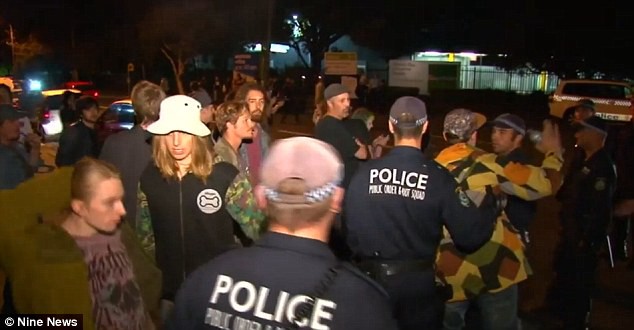
In the summer of 2014, a ten-block area in the middle of Kreuzberg in Berlin was cordoned off around a school in which some refugees had barricaded themselves in defiance of deportation orders. Next to the school, in the middle of an intersection, a mobile sound system was set up, around which hundreds of people sat in the streets in solidarity with refugees. Around them were about eight or nine police vans, with dozens of police standing around, watchful.
Before me was a one-man/woman electro-punk band, who screamed into the mic above pummeling beats and abrasive slabs of synth noise at a high volume. People listened, and the police stood around with arms crossed, doing nothing. Afterwards, I began my set, at a lower volume, with groovy African music. Smiles immediately appeared all around, as people stood up and began to dance. Chaos erupted suddenly only three minutes later, as a dozen police rushed the sound system, yelling aggressively to shut off the music. I switched off the sound and threw my arms around my equipment, because it looked like they were about to smash everything. Protestors tried to stop them, a few fights broke out, and some were arrested, as I packed up and got the hell out of there.
This experience made one thing very clear to me: the most dangerous thing in the eyes of the police was dancing. But why?
Prohibition, Cooptation, Restriction
In 186 BCE 7,000 members of the cult of Dionysus were imprisoned, tortured, and executed in Rome for challenging “Roman values” with group sex, psychoactive substances, and dancing. (3) The Bacchic Mysteries were infamous for the blurring of boundaries between genders and classes, promoting dangerous ideas such as rights for women, children, foreigners, and the poor, and giving slaves a taste of what freedom feels like. Justification for the crackdown was the claim of criminal activities during the all-night, all-day ecstatic orgiastic rites. But even such large-scale suppression failed to eradicate the movement, and Rome eventually gave the cult official status, making it a state-sanctioned religion, in order to curtail its vitality, better monitor its activities, and reduce its influence on the population.
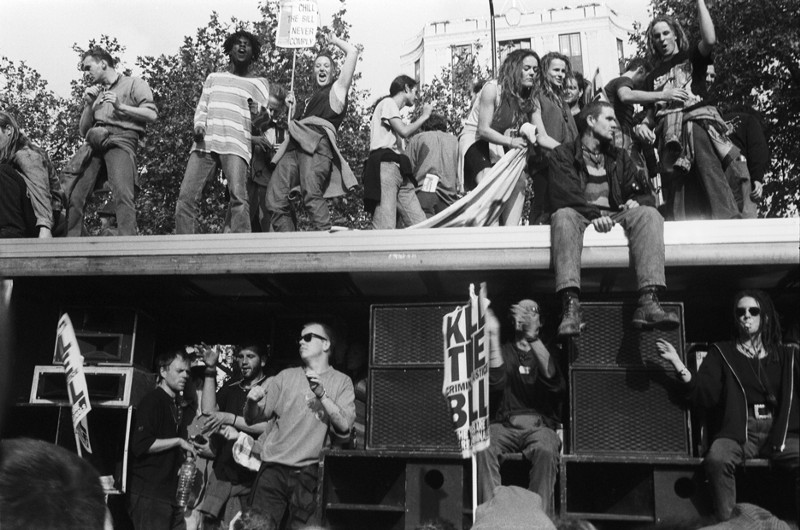
This should sound familiar to us, because it is no different from the passing of many versions of Anti-Rave legislation during recent decades in the U.K., U.S., and elsewhere, based on allegations of criminal activities during the events (usually involving psychoactive substances). Under these new laws, voluntary dance gatherings outside of the structures of consumerism were strictly forbidden, and police in the U.K. had the power to remove people from events featuring music “characterised by the emission of a succession of repetitive beats” (4). As a result, dancing together is often today largely only allowed within the confines of commercialized and licensed club spaces, restrained by codes of conduct, and limited within the span of a few hours per night. Another example of the prohibition of social dancing was the cabaret licenserequired of bars and clubs in NYC in the 1990s for the permission of “moving in time to music” (5) on the premises: on multiple occasions I have seen police storm venues and shut down concerts under this pretext. (correction: I’ve just been alerted to the fact that this cabaret license law is still very much in effect in NYC as of 2017)
Also exactly the same as the way Rome eventually dealt with the Dionysian cult is the way dance cultures are today coopted by the established consumerist order, only allowed to exist on its terms, in authorized spaces, and between restricted hours. People are permitted to have a little bit of controlled, subdued, and commodified fun, but not too much, because the collective experience of exaltation and joy must not lead dancers to question the validity of regimented routines of normal life, and must not disrupt the work-consume-sleep cycle.
The Dionysian cult and other similar mystery religions of the last few centuries B.C. were already forming a revival movement that sought to bring back indigenous Eurasian and European practices, pre-Abrahamic animist spiritual systems — ancient methods of worship, rituals, and modes of being which by then were nearing extinction at the hands of successions of conquering armies. After going underground again since the fall of Rome, secret Bacchanals went on in the forests of Europe until as late as the 1700s, before being eventually stamped out by government and religious institutions (only to resurface in the West a couple of hundred years later, as twentieth-century counter-cultural movements).
https://www.youtube.com/watch?v=hm3qQyWXoe0
Another surviving example of pre-modern pagan traditions is the May Day fertility festival, in which young men and women dance to celebrate the beginning of summer on the first of May, around the May Pole, a ritual banned by the church for many centuries. It is surely no coincidence that 300,000 workers in Chicago chose this day — due to its associations with folk culture in opposition to authority — to go on strike in 1866, protesting long hours and horrible work conditions, organized by socialist and anarchist unions.
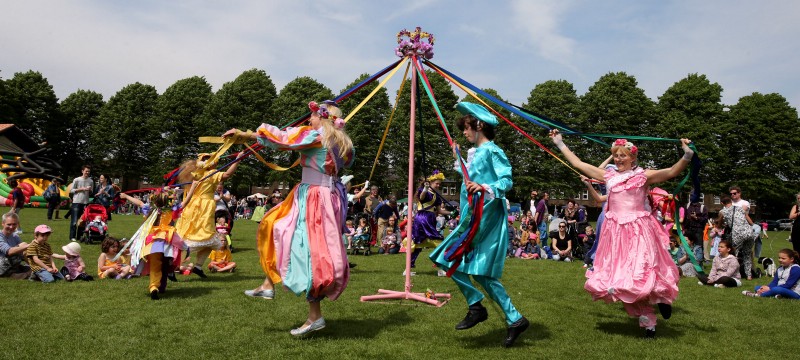
Class, Hierarchy, and the State
The cultural establishment in Europe has always regarded social dancing to belong to the realm of the poor, uneducated, and brutish, essentially an indecent activity fit only for drunken fools. (6) And this is largely true, as the lower classes and marginalized groups always more extensively engage in participatory dancing, preserving remnants of age-old practices. It is not accidental that the Irish, with their rich indigenous cultural history abused and exploited by the processes of modernization and colonialism, are known to be the most ardent dancers in all of Europe. Many other examples exist, such as Polka, a music and dance form almost exclusively belonging to the underclasses of many European societies. And consider the history of dance music cultures such as Flamenco in Spain and Tango in Argentina, which are the literal cries of defiance from gypsies, the poor, people hated and abused by bourgeois society, now proudly celebrated by the same bourgeois society as a “national treasure”.
In place of music for voluntary and spontaneous communal participation, the upper-class nobility developed cerebral and passive musical frameworks that are divorced from the body. These forms champion top-down hierarchical roles and structures, enforce a rigid separation between artists and audience, and restrict dance to the narrow sphere of performance and spectacle. The attitudes cultivated by this specialized aristocratic culture undoubtedly persist today: the Wikipedia entry for “dance” first defines it as a performative art form, only mentioning participatory dance later.
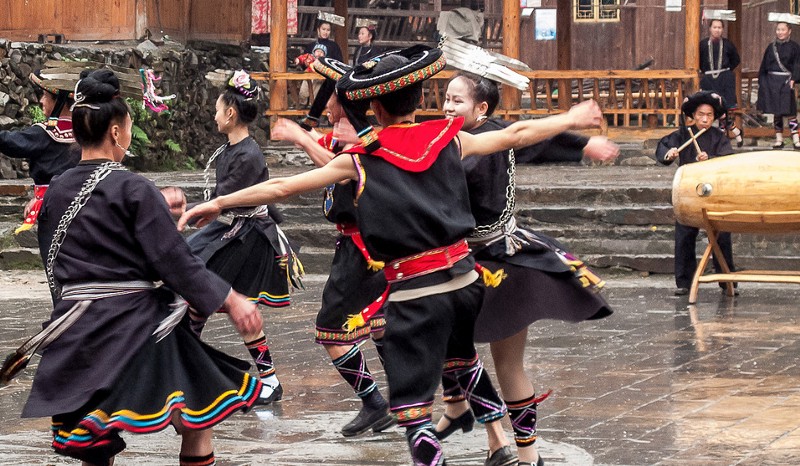
But this general historical process of erasing aboriginal cultures by dominant empires, and the resultant institutionalized repressive attitudes toward social dancing, are not confined to Europe. Without exception, legacies of participatory dancing around the world has always existed in the cultures of the systematically oppressed, under-privileged, and marginalized, since the dawn of civilization. On the flip side, the official music of kingdoms, states, and their elites is typified by grandiose, courtly, self-important, reserved, and restrictively cerebral “classical” forms that dictate docile and passive modes of enjoyment. In China, the thousands of ethnic minorities (such as the Uyghur) have exquisite and flamboyant customs of social dance music, compared to the inert, lethargic, and solemn music of the dominant Han culture. In India, the tribal minorities and religious groups have much more raw, funky, and danceable tunes than those in the highly refined, specialized, and formal Indian Classical canon. In Indonesia, the smaller gamelans that play human scaled music found in the vast periphery of forests and islands promote more joyful, freeform dancing, in contrast to the large-ensemble court gamelans that play stately, majestic, and monumental compositions where dance is pure spectacle.
Indigenous vs. Colonial
Compared to other places, indigenous ways of life survived much better on the African continent, as African cultures were only recently, since roughly 1500s, subjected to the homogenizing and destructive process of colonization. The taking indigenous land, erasure of indigenous cultures, exploitation, enslavement, and mass murder of indigenous people, all unfolded in Europe and Asia a long time centuries and millennia prior. Hierarchical and oppressive states such as the Malian Empire did also exist in Africa, but they somewhat differed from their counterparts in South America, Europe, and Asia, in absorbing the cultures of the groups they conquered, rather than eradicating them completely. These are a few of the main reasons why the culture of rhythm and dance in Africa survives and thrives to a greater extent than elsewhere.
https://www.youtube.com/watch?v=N8ZULUwLd20
Ever since the advent of colonialism, rhythmically focused music from Africa has been regarded by the European establishment as primitive and subhuman, its guttural noises and beats seen as belonging much more to the animal kingdom than polite society. In particular, hip movements were (and still are, as seen in the recent controversies over twerking) a huge taboo among domesticated Western subjects. Unbroken connection with the body and guilt-free expression of sensual energy was (and is) considered “improper” and “lewd” to people conditioned by millennia of body-shame and sexual repression. This is why Africans had to be demonized, humiliated, brutalized, subjugated, “civilized,” and Christianized, because their supreme dignity, and lack of shame and inhibition were greatly intimidating to the prohibitive cultures of Europe.
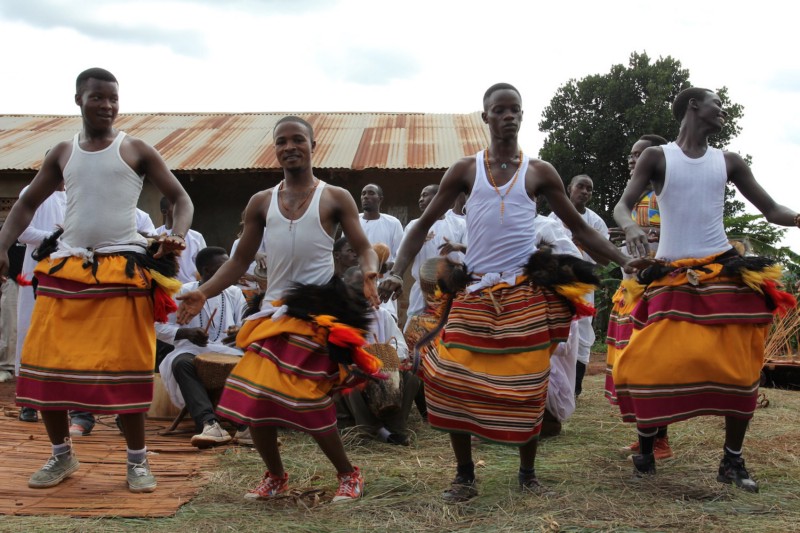
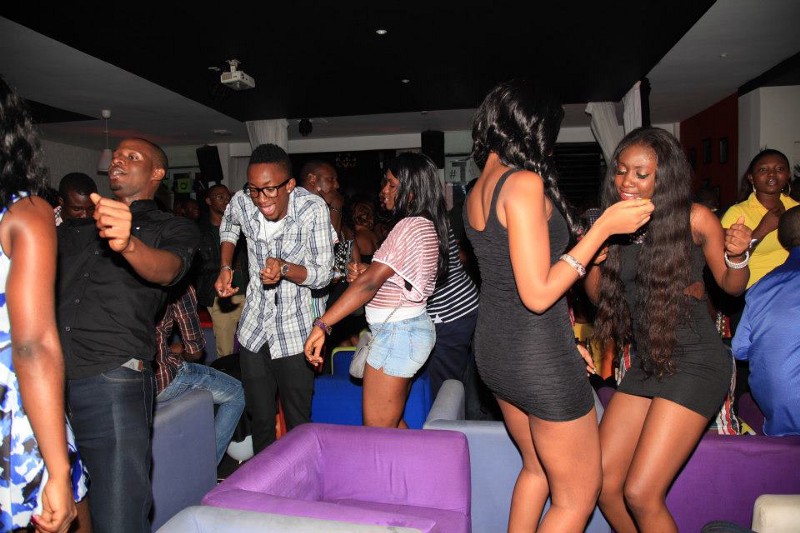
Anyone not convinced of this only needs to compare the dance floor of any contemporary club in Africa with those in Europe, on any given night: The difference is immense. In my experience of the motherland, it is typical for people to walk into a party and immediately start shaking and gyrating to the music joyfully, artfully, with unique creativity and individualized moves. Dancing also almost always takes place together in groups, often forming the proverbial circles in the center of which people take turns showing off their skills, radiating unabashed sexuality, to the enthusiastic cries of approval from others. And at informal gatherings without music, someone would often start playing music on a cell phone, and people might get up to boogie. Meanwhile, in perfectly designed European clubs with the best sound systems, people need to drink alcohol for hours before finally overcoming deeply seated embarrassment and start self-consciously half moving to the beat like stick figures without hip joints — and almost always alone.
Central Cultural Heritage
Beat-driven music and social dance was central in the evolutionary process of Homo Sapiens, both in terms of biology and sociology. Biologically speaking, bipedalism, or the ability to walk upright, is only possible with cognitive processes such as “beat induction,” the ability to anticipate the next beat as part of a syncopated pattern. Rhythm in Africa and elsewhere is built around this basic principle: the placement of some of the beats in the rhythm off the grid, a little bit before or after when the pattern-recognition part of our brains tells us it should drop, and the resultant tension is what makes us want to move to the music. If dance music is the design of sonic patterns in time according to the proportions — and the joyful, healing movements — of the human body, it is a science that has been perfected in the land of Africa, perhaps more than elsewhere.
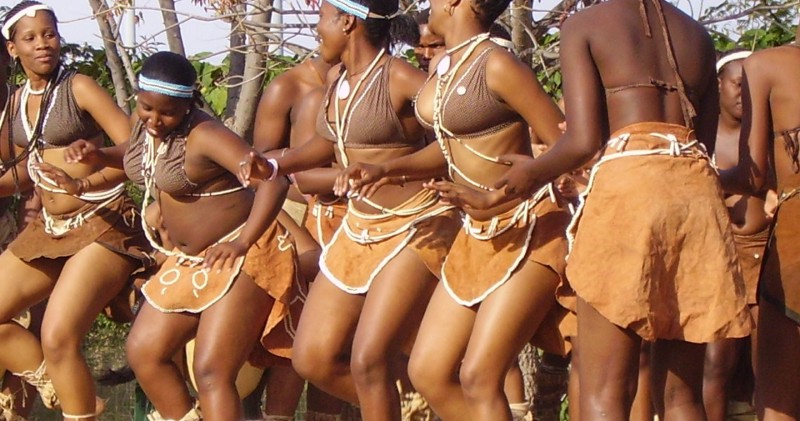
In terms of sociology, drumming, singing, and dancing together (along with ritualized orgiastic practices in conjunction with the imbibing of sacred entheogens) builds group cohesion, develops trust, encourages cooperation, and forges strong bonds between members of society. Participatory dance is a deeply ingrained, centrally important social trait, an essential organizing principle common to human communities around the world prior to the advent of class and hierarchy roughly 12,000 years ago. Because it brings people together voluntarily, and creates ecstatic group consciousness via collective trance states, communal dancing reveals divisions, categories, inequalities, and laws to be arbitrary and meaningless, and is a convivial activity inherently corrosive of top-down authority. As David Hesmondhalgh writes,
[R]ave confirmed the subversive populism of dance. Its dangerous reputation was sealed by a ‘moral panic’ in the national press about the drugs associated with the scene. […] Accompanying this panic, though, was an especially strong Utopian discourse of collectivism and equality within club culture, which stressed the breaking-down of ethnic, class and gender differences. Dance events had long been viewed as rituals of togetherness and inclusion, but the new dance culture went further, and the rhetoric at least was genuinely democratizing: ‘No performers, no VIPs, we are all special,’ was one typical slogan from a club flyer. (7)
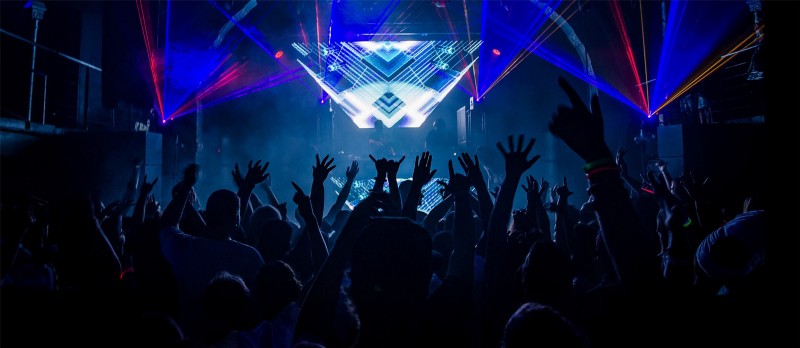
The popular notion today that dance music and its “unreflective hedonism” is apathetic and apolitical needs to be reversed: social dance itself is inherently anarchic, democratic, and revolutionary. Dancing re-connects us to both our own and other bodies, reopens dammed up libidinal flow, dissolves ego-identification, and temporarily restores a sense of group unity. An embrace of communal, orgiastic sexuality on the dance floor, even if only symbolically, is itself a radical gesture caustic to authority and its enforced repression and alienation. It is no accident that House music came from the queer black spaces that marginalized people had carved out for themselves, and Techno was “a reaction to inner-city decay, as by-product of African-American struggle, as a form of protest.” (8)
We may have much work to do concerning the utilization of the emancipatory power of dance in specific revolutionary praxis, but around the world it is, and has always been, a central part of liberation struggles. Despite the effects of commercialization, and even within the co-opted space of the most commerical dance clubs, consumerist codes can break down and borders can dissolve. As dancers experience ecstatic and extraordinary states of mind which are anathema to routine alienated consumption, they realize, if only semi-consciously, and for brief moments, that the truly rewarding things in life are not money, shopping, or status. Perhaps in some ways, the 12,000-year-old oppressive walls of hierarchical civilization can be dismantled, and the structural cancer that is capitalism can be cured, simply by joyful hip-shaking.
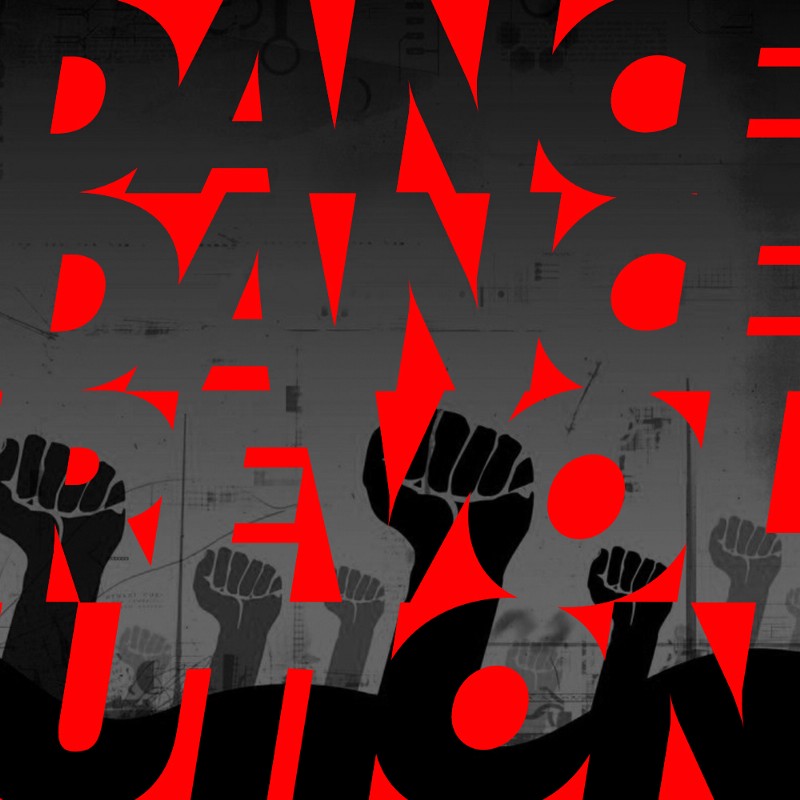
https://www.mixcloud.com/djzhao/dance-dance-revolution/
All social dance music is inherently insurrectionary, but here is an Anarcho Communist Party Mix, 3 hours of leftist revolutionary music from all over the globe, spanning many decades and a wide variety of genres. From African Independence era classics to Detroit rebel Techno, from communist Reggae to Riot Bass, from Rojava Debkah to EZLN grooves, from Afrobeat to Leftist Hip Hop, from Digital Hardcore to the Internationale… for allies and comrades everywhere in our collective struggle towards freedom.
By Leo Zhao
This article was first published on This is Africa. Republished here with permission of the author.
NOTES
1. Desmond Tutu, Power of Freedom Songs (Making Music, 2002).
2. Marc de la Maison, Facebook comment (Facebook, 2016).
3. Daniele Bolelli, The Slave Wars (History On Fire, 2015).
4. Criminal Justice and Public Order Act, (HMSO Publications, 1994).
5. NYC Cabaret License, (NYC Department of Consumer Affairs, 1997)
6. Piero Scaruffi, A History of Popular Music before Rock Music (Omniware, 2007).
7. David Hesmondhalgh, “The Cultural Politics of Dance Music,” (Soundings 5, 1997).
8. Robert Hood, Electronic Warfare: The Political Legacy of Detroit Techno (Pitchfork, 2015)
Thanks to Nadine Siegert and all at Iwalewa Haus, University of Bayreuth for commissioning the lecture and dj set which became this piece and this recording.
]]>Deprecated: Creation of dynamic property WP_Term::$cat_ID is deprecated in /home/undercurrents.nl/web/undercurrents.nl/public_html/wp-includes/category.php on line 378
Deprecated: Creation of dynamic property WP_Term::$category_count is deprecated in /home/undercurrents.nl/web/undercurrents.nl/public_html/wp-includes/category.php on line 379
Deprecated: Creation of dynamic property WP_Term::$category_description is deprecated in /home/undercurrents.nl/web/undercurrents.nl/public_html/wp-includes/category.php on line 380
Deprecated: Creation of dynamic property WP_Term::$cat_name is deprecated in /home/undercurrents.nl/web/undercurrents.nl/public_html/wp-includes/category.php on line 381
Deprecated: Creation of dynamic property WP_Term::$category_nicename is deprecated in /home/undercurrents.nl/web/undercurrents.nl/public_html/wp-includes/category.php on line 382
Deprecated: Creation of dynamic property WP_Term::$category_parent is deprecated in /home/undercurrents.nl/web/undercurrents.nl/public_html/wp-includes/category.php on line 383
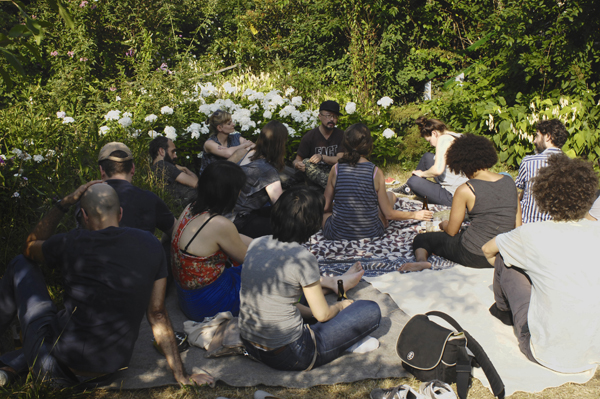
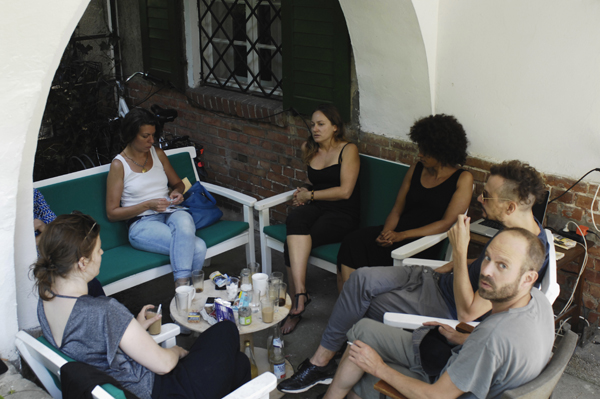
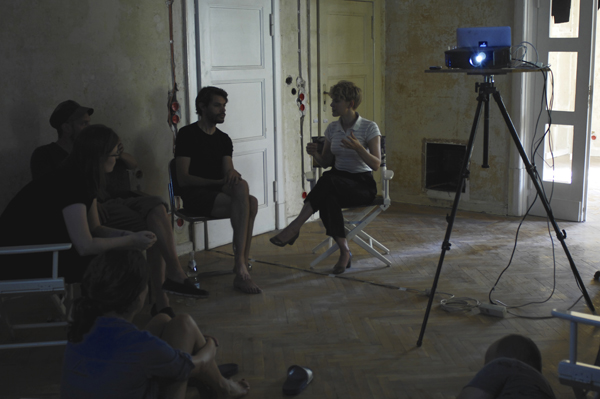
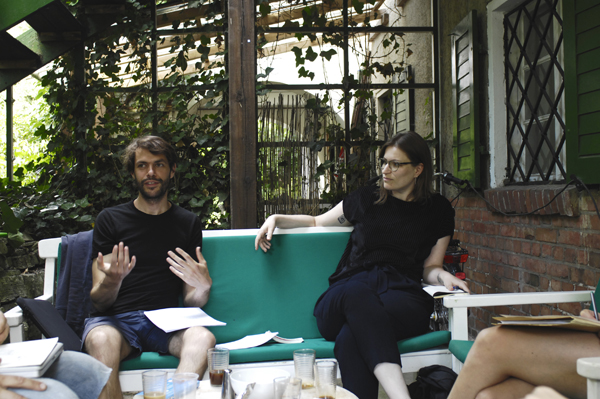
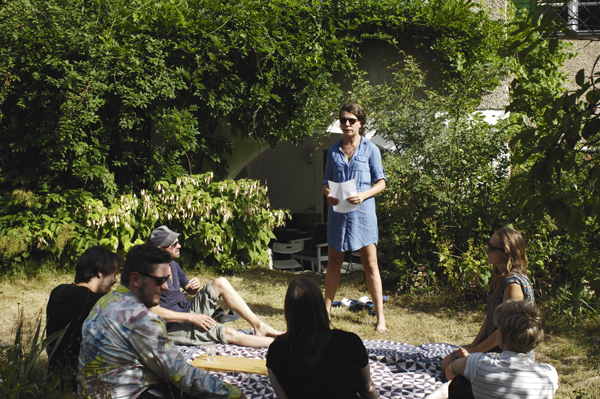
An important inspiration for the immersion into the questions during common-place was the writings of poet and philosopher Édouard Glissant (1928-2011) – in particular his concept of the ‘poetics of relation’. His book with the same title defines poetics not just as poetry, but as a way of imagining, living, and acting upon the world and translation as relation. One of the guiding principles in Glissant’s thinking is the concept of opacity: the opposition to transparency, the untranslatable and unknowable that Glissant sees as a way to challenge and subvert systems of power. Glissant demands a ‘right to opacity’ and calls for an understanding and accepting of difference without measuring this difference to an ‘ideal scale’, comparing it or making judgments. The encounter in Berlin was therefore envisioned as a ‘common-place’ in Glissant’s terms. For Glissant, common-places (lieu-commun) are not preconceived opinions, but, places where one idea about the world meets another one. Places, where a thought about the world is confirmed by another thought about the world.
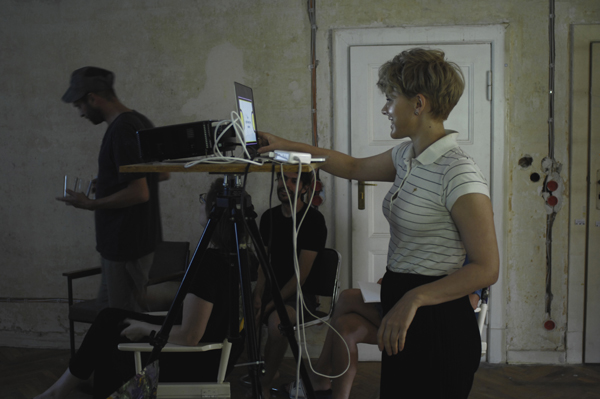
As well as a study of Glissant’s thinking, the project is an attempt to conceive of possible ways of working collectively and reimagining the process of exhibition making. Commonplace was the first tentative step towards a public presentation to be opened at Hotel Maria Kapel in Hoorn in the beginning of September 2018.
Participants: Rachel Alliston, Tomás Bartoletti, Rob Blake, Season Butler, Irene de Craen, Raphaël Grisey, Judith Lavagna, David Magnus, Mahony, Gerald Mandl, Luz Peuscovich, Esper Postma, Jerop Seurei, Sári Stenczer, Aiko Tezuka, Jasmijn Visser, Bruno Watara, Leo Zhao
Read the full text version of one of the lectures given by Leo Zhao here.
Deprecated: Creation of dynamic property WP_Term::$cat_ID is deprecated in /home/undercurrents.nl/web/undercurrents.nl/public_html/wp-includes/category.php on line 378
Deprecated: Creation of dynamic property WP_Term::$category_count is deprecated in /home/undercurrents.nl/web/undercurrents.nl/public_html/wp-includes/category.php on line 379
Deprecated: Creation of dynamic property WP_Term::$category_description is deprecated in /home/undercurrents.nl/web/undercurrents.nl/public_html/wp-includes/category.php on line 380
Deprecated: Creation of dynamic property WP_Term::$cat_name is deprecated in /home/undercurrents.nl/web/undercurrents.nl/public_html/wp-includes/category.php on line 381
Deprecated: Creation of dynamic property WP_Term::$category_nicename is deprecated in /home/undercurrents.nl/web/undercurrents.nl/public_html/wp-includes/category.php on line 382
Deprecated: Creation of dynamic property WP_Term::$category_parent is deprecated in /home/undercurrents.nl/web/undercurrents.nl/public_html/wp-includes/category.php on line 383
Tudor Bratu: ‘Firstly, I don’t believe we should be talking about a refugee crisis, but instead about a crisis that has resulted in refugees and migration flows. I would also immediately add that in my opinion, the emphasis in the general discourse is wrong, whether consciously or otherwise. Instead of conducting a debate about the reasons why large numbers of people, often at risk to their own lives, feel they have no choice but to leave their native countries, politics and the media would have us believe that we are the victims. This image is continuously reinforced by statements such as ‘we are being swamped by refugees’. By playing this disingenuous victim role, populist political figures such as Geert Wilders and Thierry Baudet win power and influence through claiming to fight for the ‘protection of our national or cultural identity’. In the end, the language they use encapsulates the underlying logic of their politics: if our national or continental identity is under threat from masses of refugees, we have an apparently valid, although in reality false, reason to close borders, introduce refugee quotas, etc.’
‘To return to your question: the migration flows of 2015 reminded me of the stories of my grandma, who also became a refugee when the Soviets annexed Moldavia after the Second World War. It’s strange to think that my grandma’s fate was decided at the stroke of a pen by three middle-aged white men [Roosevelt, Stalin and Churchill, ed.] during the Yalta conference. Because the fate of millions is so overwhelming that it becomes unreal, and thus also incomprehensible, I decided to approach the problem via a personal and intimate story. After all, it’s easier for the viewer to identify with an individual than with a crowd.’
In the summer of 2015, you travelled through Europe by train with refugees. What motivated you to do this? What was your goal?
‘In 2015, I took part in a residency in Graz at the height of the migration flow. At that time, the whole of Austria was in the grip of a conflict: on the one hand, politicians were engaged in a right-wing populist discourse, while on the other a grassroots citizens’ movement was seeking ways to express their own humanity. In Vienna, students handed out flyers in many languages intended to help arriving refugees to find their way around. Local residents handed out soup, bread and clothes on the street. It was fantastic to see and to experience. But the real crisis, the humanitarian crisis that affected the whole of Europe, was most apparent a few hundred kilometres away at Keleti station in Budapest. There, in the scorching sun, hundreds of refugees waited for a means of travelling onwards to Germany without proper care such as water, medicines or adequate sanitation. I had seen enough of the images selectively broadcast by the media, and wanted to see with my own eyes what the great wave of migration actually was. When I arrived, I was shocked by the smell of dried-up urine combined with the putrid odour of the decaying corpse of European Humanism. The conditions were so appalling that there could be no talk of humanity or compassion. The idealistic, civilised Europe revealed itself to be an empty shell.’
In the work, you discuss the concept of Terra Nullius (literally no man’s land or empty land) and how this concept, particularly from the perspective of the cultural impact of modernism, is the foundation of European thinking. Can you explain what you mean by this?
‘As can be read in part one of The Brutality of Fact, the concept of Terra Nullius was formulated in 1095 by Pope Urban II as a way of justifying the First Crusade, which resulted in the fall of Jerusalem in 1099. The term allows a place to be seen as ‘empty’ and thus as there to be taken. In this way, it made the crusades possible, and later also colonialism, for example. European ethics and Christianity teach us that we should, in principle, love our neighbours. As such, these ethics do not allow us to exterminate entire cultures and to find justification for doing so. However, the concept of Terra Nullius undermines the status of the Other as human, and thus also their equality. This allows the concept to be used to justify an ethically indefensible act, by conceptually declaring the other to be inhuman. Once robbed of their humanity and equality, the other may be exterminated without the need for further moral justification.’
‘I see fascism and communism as dubious ‘high points’ of modernism. Both ideologies strove to create a new world order, while using modernist architecture and ideology to support and justify this. However, the ‘modernity’ they aimed for had the same basis as the concept of Terra Nullius. Namely: those who are not as we are have no rights, and may thus be destroyed. In light of the current discourse around migration questions, I believe it’s clear that this problem within the current structure of the West as ideology is very far from being solved.’
In the work, you also describe how architecture is used to create the Other. Can you explain what you mean by this?
‘Recent European history teaches us that the ideology of modernism is very well suited for use as a means of repression. In Eastern Europe, for example, mass production became the slogan used by various dictatorial regimes to justify destroying entire cultures from the inside out. This happened in Romania, for example: the agrarian society was destroyed during the period 1950-1970 through the forced relocation of farmers from the country to newly-built industrial cities. This forced migration flow resulted in a dislocated society that lost both its social cohesion and its ‘purpose’. For me, concrete, mass production and endless rows of grey apartment blocks symbolise the destructive power of modernism.’
The exhibition at HMK shows the second part of The Brutality of Fact. Can you say something about how the second part relates to the first?
‘Part one of The Brutality of Fact tells of the systematic dehumanisation of the other and its consequences through a personal narrative. Part two is more rational, and as such perhaps more detached, and concerns the necessity of making the right intellectual choices. With this I mean to say that I find the responses to the politics of migration so far to be mostly emotional. I see people instinctively defending their own positions in political debates, and few really rational choices. While part one is perhaps capable of touching the viewer, this emotional impact will have no further consequences if that same viewer does not ask themselves who he or she is, and what he or she wants to be. In this sense, part two perhaps takes a moralistic position out of necessity, although I usually don’t see this as a good thing.’
One of your sources of inspiration is the American writer and activist bell hooks. One of the slides quotes her text ‘Marginality as site of resistance’. How do see marginality in relation to resistance, and how is this/the work of bell hooks expressed in your work?
‘Marginality, as defined by bell hooks, offers an escape route and a way to make those without power aware of their own potential. In reality, all normal people live their lives in the margin, and only a few reach the ‘top’, where decisions are made and where social influence can be exerted. The rest, the vast majority, live, go to work, come home, have trouble paying the bills, and are only of importance as a group, as a crowd. Despite this, hooks argues that this position in the margin of history is exactly the position that can empower one to take action. For me, hooks reactivates the idea of freedom of action. In recent years, a sort of fatalistic thinking has emerged around the migration debate, and also around subjects such as climate change. People think: ‘what can I do about it?’ Such a way of thinking leaves no space for freedom of action. Instead, people have the feeling that there are no options, and no space to make their own decisions.’
The presentation is intentionally intimate, and focuses on the visitor’s specific experience. Why is this important to you? What do you want the visitor to take away having seen the work?
‘A lot of contemporary art is geared towards creating an ‘aaaahh’ moment. I call it a sort of art of the advertising message, of which (to stay with the topic of migration), Ai WeiWei’s image of himself as a drowned child washed up on a beach is a good and deeply regrettable example. I aim for a work and an approach that can resonate longer and deeper, that are less connected to today’s soundbite culture. Because the slide show has a specific duration, the viewer will have to take the time to experience the work, to read, and to let it sink in. As such, it facilitates a sort of forced self-reflection in a society that generally has no time, that has an attention span of no more than a few minutes.’
Originally published in Studio Note #8 (July 2018), Hotel Maria Kapel (HMK)
]]>Deprecated: Creation of dynamic property WP_Term::$cat_ID is deprecated in /home/undercurrents.nl/web/undercurrents.nl/public_html/wp-includes/category.php on line 378
Deprecated: Creation of dynamic property WP_Term::$category_count is deprecated in /home/undercurrents.nl/web/undercurrents.nl/public_html/wp-includes/category.php on line 379
Deprecated: Creation of dynamic property WP_Term::$category_description is deprecated in /home/undercurrents.nl/web/undercurrents.nl/public_html/wp-includes/category.php on line 380
Deprecated: Creation of dynamic property WP_Term::$cat_name is deprecated in /home/undercurrents.nl/web/undercurrents.nl/public_html/wp-includes/category.php on line 381
Deprecated: Creation of dynamic property WP_Term::$category_nicename is deprecated in /home/undercurrents.nl/web/undercurrents.nl/public_html/wp-includes/category.php on line 382
Deprecated: Creation of dynamic property WP_Term::$category_parent is deprecated in /home/undercurrents.nl/web/undercurrents.nl/public_html/wp-includes/category.php on line 383
Deprecated: Creation of dynamic property WP_Term::$cat_ID is deprecated in /home/undercurrents.nl/web/undercurrents.nl/public_html/wp-includes/category.php on line 378
Deprecated: Creation of dynamic property WP_Term::$category_count is deprecated in /home/undercurrents.nl/web/undercurrents.nl/public_html/wp-includes/category.php on line 379
Deprecated: Creation of dynamic property WP_Term::$category_description is deprecated in /home/undercurrents.nl/web/undercurrents.nl/public_html/wp-includes/category.php on line 380
Deprecated: Creation of dynamic property WP_Term::$cat_name is deprecated in /home/undercurrents.nl/web/undercurrents.nl/public_html/wp-includes/category.php on line 381
Deprecated: Creation of dynamic property WP_Term::$category_nicename is deprecated in /home/undercurrents.nl/web/undercurrents.nl/public_html/wp-includes/category.php on line 382
Deprecated: Creation of dynamic property WP_Term::$category_parent is deprecated in /home/undercurrents.nl/web/undercurrents.nl/public_html/wp-includes/category.php on line 383
Ania Molenda: Where did your interest in working with the notion of borders and migration come from?
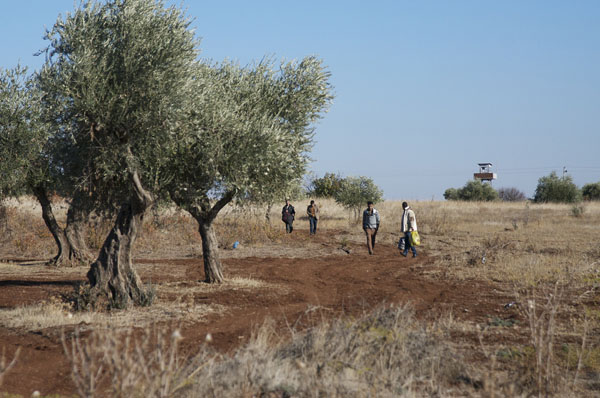
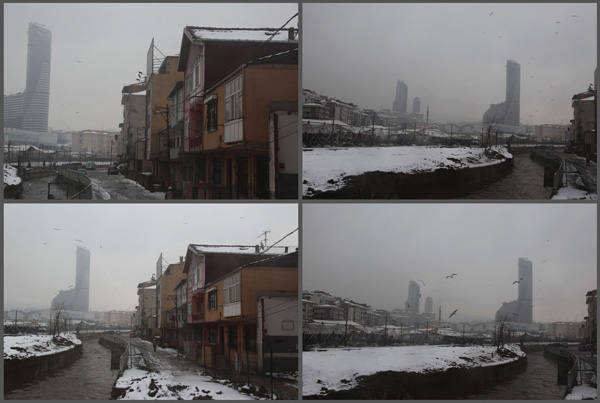
Merve Bedir: ‘About three years ago I was studying the spatial aspects of the “arrival neighbourhoods” in Istanbul. Some of these neighbourhoods are places where the Kurdish people, displaced from cities in southeast Turkey, and other migrants from Russia, Saudi Arabia, Iraq, Turkmenistan or African countries, have settled especially over the last 20 years. After the revolution in Syria in 2011, I began researching how the migration that resulted manifests itself in cities and at the border between Syria and Turkey, as well as in other countries like Bulgaria and Jordan. Borders are necessarily tied to a history of conflict and migration. In this sense, this is not a new story. In 2014, I curated an exhibition entitled “Vocabulary of Hospitality,” which was an annex to Volume’s travelling “Architecture of Peace” exhibition (1). This exhibition is when my work first became visible.’
AM: Often when we talk about architects’ involvement in the issues of war and migration, we think of the provision of shelter. Your focus is more on the social aspects of integration. Has it always been that way?
MB: ‘The reason why I haven’t been looking at the issue of shelter is that it was heavily politicized in Turkey through refugee camps. I didn’t really want to be instrumentalized by these politics, where you cannot even question the notion of “public” in a camp. Instead, I prefer to ask “How can we live all together?” To me, stating the question this way separates it from nationality and politics, and also from questions of the temporary and permanent. When I look at shelter, I want to analyze it as a concept and understand how it works. It does not concern only refugee camps. Reception centres and detention centres are also forms of shelter for refugees. I see shelter as part of a bigger narrative of how we live together. At the same time I am well aware that the provision of shelter is urgent. It is the first and foremost need that we react to in a state of emergency, and mass migration is a state of emergency. However, I don’t think we can look at it only through that lens.’

AM: Legal structures that could resolve the emergency and resume “normality” are so complex that the slowness of implementing these laws often put migrants in a situation of a permanent transit. You just mentioned that we cannot look at the issue of migration only as an emergency; what’s your point of view on the issue of temporality in addressing problems of migration?
MB: ‘That’s in fact one of my biggest worries when I hear about building refugee camps or hosting refugees in general. The emergency resulting from mass migration is different than the one of a natural disaster, because it is a part of international affairs, national borders, citizenship, security, sovereignty, war and politics. This permanent temporariness, you mentioned, in many cases comes a result of how the state of emergency is used as an excuse to suspend the law. We can see it in the recent example of Denmark confiscating refugees’ belongings, and Germany, Hungary and France have also acted in similar ways. By suspending the law, the state creates for itself a space to act; but in a situation where the law is suspended and people try to sustain their lives, permanent temporariness pushes them into a limbo. To become permanently temporary means that there is nothing to hold onto, you don’t know what is to come, you don’t have any prospect of the future, and where there is no law, anything can happen.’
‘Another reason why refugee camps are permanently temporary is the status of the migrant, the length of the asylum process and the duration of the conflict itself. In the Netherlands, an asylum seeker has to wait a year to obtain a refugee status. In Turkey, before 9/11 it was around six months and now it is more than six years. In some African countries the average time spent in a refugee camp is thirteen years. So this is what a permanently temporary situation is like, but it is more than that, it is being in an ambiguous situation where you don’t know what the future is. Basically, the future is full of terror.’
AM: When we look at the way refugee camps are built, they are implicitly meant for a temporary stay. In reality they are occupied for periods of time that are difficult to classify as temporary: thirteen years sounds permanent to me.
MB: ‘There is a lot of discussion about refugee camps. One of the most recent ones is that IKEA is designing units for refugees and selling them to the United Nations High Commissioner for Refugees (UNHCR). The cost of providing a UNHCR tent for 13 years is around 169 euro. The IKEA unit costs ten times more. It is a significant difference to what UNHCR can or should provide. I am sure that IKEA’s unit is much more comfortable, but is it what we should focus on? Should we focus on making the tent more comfortable or should we focus on finding a way to stop the war that forces people into the situation of refuge? I cannot understand how such an economy can be constructed around it.’
AM: I agree that this is very difficult to understand, but it seems that the problem of war and borders is not just a physical one. Borders between nation states in general become more abstract and transform into internalized boundaries within cities and societies. I find the investigation on the language you made for the “Vocabulary of Hospitality” exhibition really interesting. Could you tell us a bit more about how this work started?
MB: ‘When the migration caused by the war in Syria started, the politicians in Turkey referred to Syrian refugees as “guests”. This word sounded great on television, but when the refugees arrived, they faced all sorts of problems related to health and shelter, and later on in education and work. They didn’t speak the language, so the reality had nothing to do with them being our guests. The fascination and horror for the context in which this term was used inspired me to look deeper into the layers of language and ways of reading them through urban space. Through an analysis of the language in Derrida’s “Of Hospitality” I curated the exhibition “Vocabulary of Hospitality” that read into various meanings of the word “guest”, such as ghost, host, or hostage in different spaces in Istanbul and other places in Turkey. One of the aspects of spaces of migration in the city is that while borders are getting more porous and/or obsolete internationally, they reappear in an invisible way within the city.’
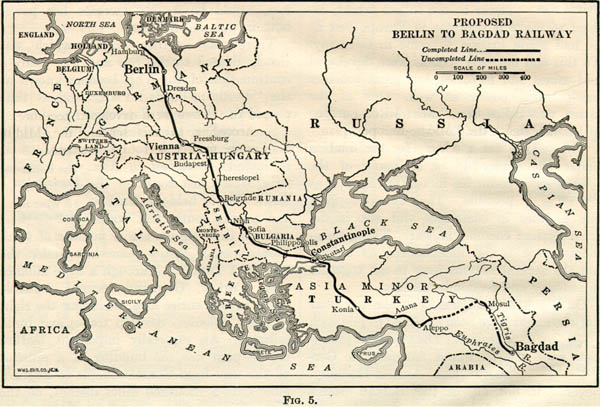
AM: In “Vocabulary of Hospitality,” you also mention that the refugees are sometimes not perceived as guests, but as parasites. Paradoxically they were seen that way, because they didn’t work (i.e. didn’t contribute to economy) but in fact they were not allowed to work. This perception is rooted in how most people understand very little about the situation of refugees and don’t know what the legal limitations are.
MB: ‘This is such an important point. Maybe we should not expect people to know everything about asylum, refuge and the highly hierarchical legal issues around them. If we look into the actual definitions, a refugee is someone who has a permanent residence permit in a country, an asylum seeker is someone who applied for the refugee status, a migrant is someone who left their home country and a stateless person is someone without a passport. We do not need to know these definitions except where they intersect with reality. In Turkey, for instance, asylum seekers are not allowed to work, yet they do work, so in the public eye they take others’ jobs and create competition. That often leads or adds up to issues of racism, xenophobia and hatred. This makes me think that what we should expect should actually be from our governments in terms of human rights, equality, the freedom of movement, and so on.’
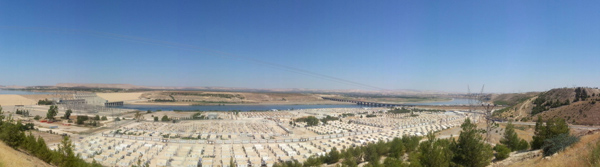
AM: Do you think that the withdrawal of governmental engagement from bringing actual solutions and clarity to these issues results from a lack of interest, or an actual crisis of the nation state as such?
MB: ‘Let me answer with an example. Recently both Mexican and Sicilian drug dealing bosses sent messages to ISIS to warn them “not to mess with their networks” after ISIS attempted to block the drug networks in their territory and the vicinity. Both mafia networks have huge influences there. So we see a situation where a terrorist organization declares itself a state and drug dealers exchange warning messages with them. To me this shows an enormous crisis of the nation state and the obsoleteness of the national borders.’
‘For me, the very idea of drawing a border based on a train line, for example, which is how the border between Syria, Iraq and Turkey was drawn, separating villages and cities into different nation states, puts national borders into question from the outset. It is natural that after the war broke out all of the inhabitants migrated and the border was practically cancelled. Borders that were not drawn by the people of the region, such as those in Turkey, or between many countries in Africa, are not functioning. People find and will find every reason to break the rules and redefine them.’
AM: Is there something we can do to respond to that crisis?
MB: ‘I think we need to act more locally, because on a smaller scale we’re more able to make decisions about our lives and negotiate them with others. Not only the issues we might have with refugees, immigrants and migrants, but also other things, like the heights of the buildings, the location of schools, who will attend them, how much green space there will be – all of these things.’
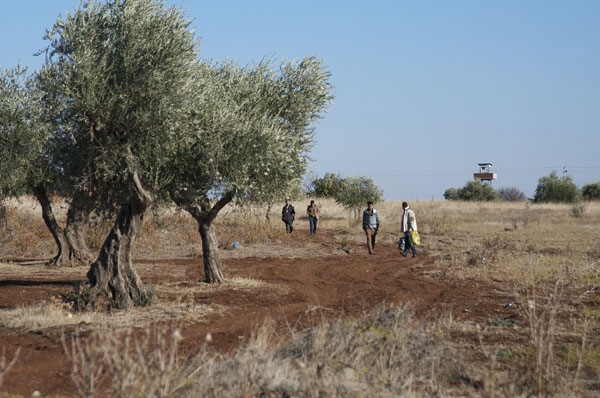
AM: All of these decisions are politics, but the word politics nowadays is associated more with a political system than with the actual politics. At the same time these two definitions seem to grow further apart, because what is happening on the political arena often does not respond to the needs of the citizens.
MB: ‘I’ll give another example. There is a word in Turkish called “hemşehri” that means “people from the same city,” and I would like to think of citizenship on that scale as well. We are much more attached to people from the same city or neighbourhood with us because we share the same issues that are about our city, and when I say share I don’t mean that we necessarily agree and look for consensus. We confront, we look at each other from the other’s eye, and we accept each other.’
‘Land+Civilization Compositions is currently working on building a kitchen garden at the Syrian border with women from Turkey, Syria, Iraq, and the former Soviet countries. They all say that they are all from Antep, the city where we are working. They have different nationalities, but they feel that they belong to their city.’
AM: There are these two opposite movements – on the one hand we can observe that people return to their local connections that might be cross-national, but on the other hand it is hard not to see the growing wave of reviving nationalism.
MB: ‘Many people hang onto created identities hoping that they will keep them together, but I don’t know how long this way of thinking will survive. I see nationality as an anxiety common to every man and woman. The moment we forefront this notion we create a hierarchy – we declare who is the host and who is the guest. And that’s the thing with hospitality, the guests should know their position, they should know where they should sit and shouldn’t ask for more than what they have been offered. That’s why asking “how do we live all together” becomes important, because it does not imply any hierarchy.’
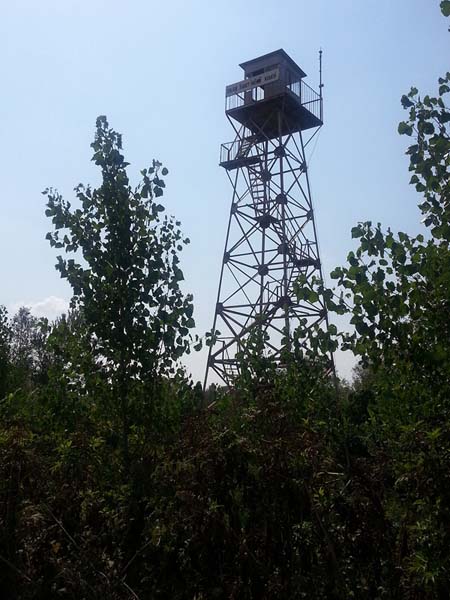
AM: You said that commoning can be a way of questioning the nature of borders, do you think we can we imagine a world without borders? What are ways of living all together we can imagine in a borderless reality? (2)
MB: ‘I would like to think of a borderless ideal, but people are entitled to their borders. Maybe we can at least think of open borders (for all). Some people say that we need a revolution to reach another form of living together, not necessarily based on the idea of a nation, and I’d rather say we need utopias. Currently we don’t know what we are longing for. We need to be able to think of (collective) futures and we should be able to find them, but it will not happen overnight. It will come through the struggles and problems we share.’
‘Commons reach beyond the understanding of the state, the public, the private, and the individual, they are much more collective and much more utopian, but not utopian as something that is highly idealized and/or can’t be achieved. Utopian, which we think of and practice everyday, and through which we will be able to go beyond the world that was defined by the rules of the former generations.’
By Merve Bedir and Ania Molenda, editor.
This article was first published on The Site Magazine on June 22, 2016. Republished here with permission of the author. Cover image: Aftermath of migration, Merve Bedir, Lesvos, Greece, 2016.
End notes
(1) Volume is an independent quarterly magazine that sets the agenda for architecture and design. (http://volumeproject.org). One of its long-term ongoing research projects, “Architecture of Peace” is conducted by a network of architects, urban planners and scholars on the international platform ‘Archis Interventions’ and has been featured in Volume #26 and #40. In 2014, The Good Cause: Architecture of Peace travelling exhibition presented a selection of results from this research. The exhibition was shown around the world, including Canada, Germany, the Netherlands, Rwanda and Turkey.
(2) Commoning is a verb to describe the social practices used by commoners in the course of managing shared resources and reclaiming the commons. It has been popularised by historian Peter Linebaugh and his book “The Magna Carta Manifesto” published in 2009. (http://p2pfoundation.net/Commoning)
]]>