Deprecated: Creation of dynamic property WP_Term::$cat_ID is deprecated in /home/undercurrents.nl/web/undercurrents.nl/public_html/wp-includes/category.php on line 378
Deprecated: Creation of dynamic property WP_Term::$category_count is deprecated in /home/undercurrents.nl/web/undercurrents.nl/public_html/wp-includes/category.php on line 379
Deprecated: Creation of dynamic property WP_Term::$category_description is deprecated in /home/undercurrents.nl/web/undercurrents.nl/public_html/wp-includes/category.php on line 380
Deprecated: Creation of dynamic property WP_Term::$cat_name is deprecated in /home/undercurrents.nl/web/undercurrents.nl/public_html/wp-includes/category.php on line 381
Deprecated: Creation of dynamic property WP_Term::$category_nicename is deprecated in /home/undercurrents.nl/web/undercurrents.nl/public_html/wp-includes/category.php on line 382
Deprecated: Creation of dynamic property WP_Term::$category_parent is deprecated in /home/undercurrents.nl/web/undercurrents.nl/public_html/wp-includes/category.php on line 383
With his book Poetics of Relation (1990) Glissant offers us a tool to reimagine the most pertinent questions of our time. ‘Instead of fixed places of origin, he offers sites of connectivity, where multiple histories and ways of being can coexist. Instead of roots, he offers the dynamic process of creolization, a poetics defined by its openness to transformation. Instead of a world of nations, he offers the archipelago, an image of the world in which we are all connected while remaining distinct.’[1] One of the guiding principles in Glissant’s thinking, as well as this exhibition, is the concept of opacity (opacité). Opacity, unlike transparency, welcomes the untranslatable and unknowable. Glissant claims a ‘right to opacity’ and invites people to accept that which they don’t understand.
Notes from a trembling community… experiments with different modes of relation and production through working collaboratively, and reimagining the process of exhibition making. The starting point for the project lies in a residential house in Berlin where a fluctuating group of artists, social scientists, children, musicians, curators, workers and thinkers came together last July. Here, starting with the organising principle of a daily meal together, they inaugurated a process of research into the poetic borders distinguishing and connecting them. Since then the invitation to contribute has been opened up further to a wider network of friends and like-minded people across the globe.
The installation at HMK is not meant as the final stage of the project, but as another phase of a longer dialogue using Glissant’s ideas as a methodology and praxis, connecting multiple voices while keeping their distinctiveness. Notes from a trembling community… is conceived as a four-dimensional archipelago, giving the audience the possibility to draw their own lines to this ongoing project through work-in-progress, sound, video, performance, images and ideas.
Exhibition from September 7 till October 20, 2018
With: Tomás Bartoletti, Oliver Bulas, Season Butler, Coletivo Kókir, Maurits Koster, Judith Lavagna, David Magnus, Mahony, Gerald Mandl, Luz Peuscovich, Pablo Pijnappel, Esper Postma, Aiko Tezuka, Leo Zhao
[1] https://henryfskerritt.com/2012/08/16/book-review-edouard-glissant-poetics-of-relation/
]]>
Deprecated: Creation of dynamic property WP_Term::$cat_ID is deprecated in /home/undercurrents.nl/web/undercurrents.nl/public_html/wp-includes/category.php on line 378
Deprecated: Creation of dynamic property WP_Term::$category_count is deprecated in /home/undercurrents.nl/web/undercurrents.nl/public_html/wp-includes/category.php on line 379
Deprecated: Creation of dynamic property WP_Term::$category_description is deprecated in /home/undercurrents.nl/web/undercurrents.nl/public_html/wp-includes/category.php on line 380
Deprecated: Creation of dynamic property WP_Term::$cat_name is deprecated in /home/undercurrents.nl/web/undercurrents.nl/public_html/wp-includes/category.php on line 381
Deprecated: Creation of dynamic property WP_Term::$category_nicename is deprecated in /home/undercurrents.nl/web/undercurrents.nl/public_html/wp-includes/category.php on line 382
Deprecated: Creation of dynamic property WP_Term::$category_parent is deprecated in /home/undercurrents.nl/web/undercurrents.nl/public_html/wp-includes/category.php on line 383
The Bratu family has experienced the turbulent period of Romania since the Second World War first hand: his grandmother as a refugee during the Soviet invasion in 1945 and his father as a dissident and political prisoner during the reign of Nicolae Ceauşescu. Bratu emigrated to the Netherlands at the age of nine, where he personally experienced the position of being the ‘outsider’.
In addition to his own migration history, the artist examines how urban environments in the former Eastern Bloc are shaped, how they change over time, and to what extent they contribute to frameworks and views around outsiders. From here, the artist reflects on the current refugee crisis. Through descriptions of encounters with refugees during journeys through Central Europe, the artist gives insight into the ways in which they are made ‘outsiders’, and the obstacles they face in an attempt to gain access to a new society.
The exhibition invites the visitor to reflection and a longer stay in order to create an image of both a personal history and a more universal history of detachment, social unrest, migration and change.
]]>Deprecated: Creation of dynamic property WP_Term::$cat_ID is deprecated in /home/undercurrents.nl/web/undercurrents.nl/public_html/wp-includes/category.php on line 378
Deprecated: Creation of dynamic property WP_Term::$category_count is deprecated in /home/undercurrents.nl/web/undercurrents.nl/public_html/wp-includes/category.php on line 379
Deprecated: Creation of dynamic property WP_Term::$category_description is deprecated in /home/undercurrents.nl/web/undercurrents.nl/public_html/wp-includes/category.php on line 380
Deprecated: Creation of dynamic property WP_Term::$cat_name is deprecated in /home/undercurrents.nl/web/undercurrents.nl/public_html/wp-includes/category.php on line 381
Deprecated: Creation of dynamic property WP_Term::$category_nicename is deprecated in /home/undercurrents.nl/web/undercurrents.nl/public_html/wp-includes/category.php on line 382
Deprecated: Creation of dynamic property WP_Term::$category_parent is deprecated in /home/undercurrents.nl/web/undercurrents.nl/public_html/wp-includes/category.php on line 383
Deprecated: ltrim(): Passing null to parameter #1 ($string) of type string is deprecated in /home/undercurrents.nl/web/undercurrents.nl/public_html/wp-includes/wp-db.php on line 3030
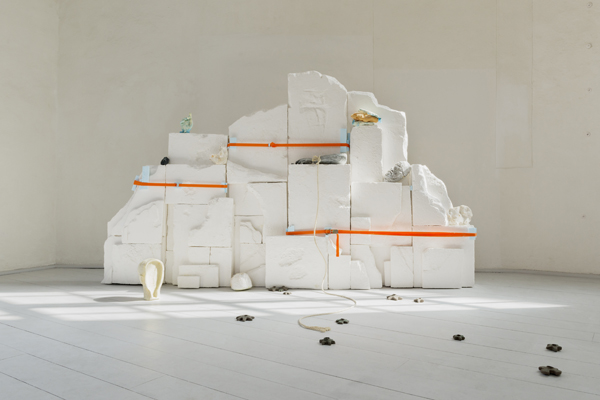
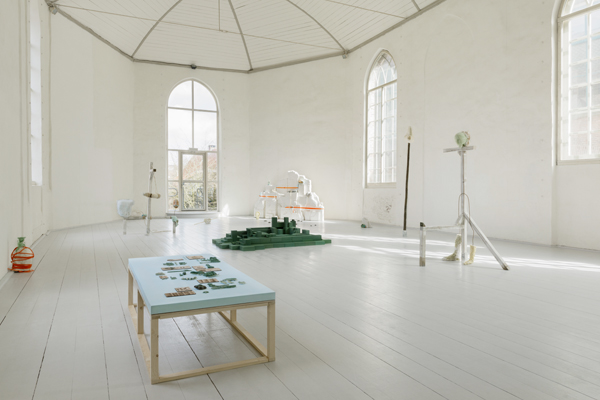
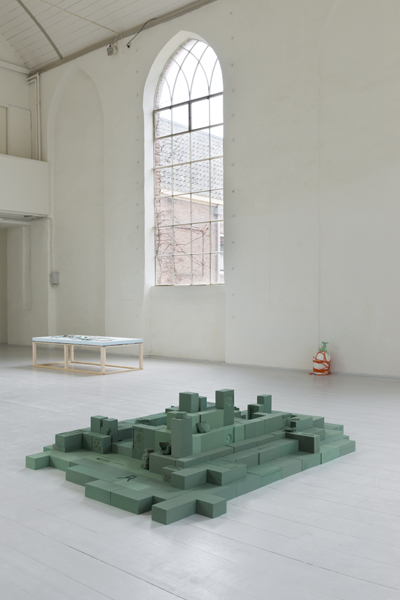
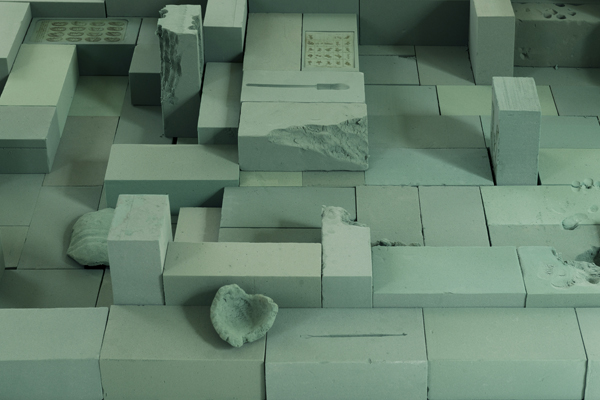
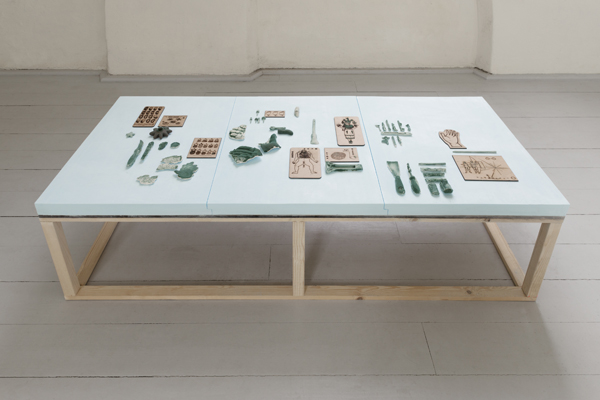
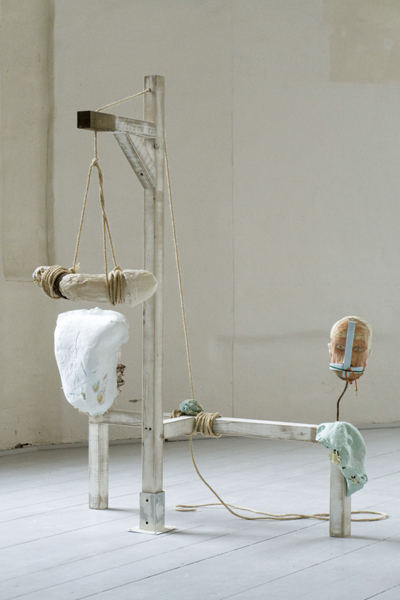
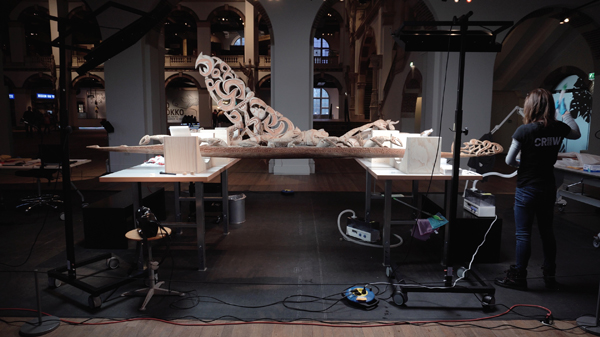
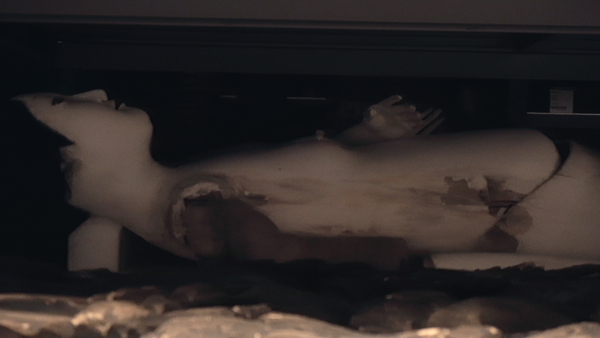
The works in the exhibition refer to colonial paintings, ethnographic and natural history museums. The exhibition deals with the way in which we tell stories through museum collections and how these mechanisms oscillate from objective academic research and forensic methodologies to subjective conservation rituals, that are often loaded with traces of colonial practices.
The exhibition explores the trajectory of mobility, reconstruction and conservation and asks questions about the idea of museology and restoration. It is a reflection on the logic of the Carahiba revolution proposed by Oswald de Andrade in his Cannibal Manifesto of 1928 and aims to question what cultural cannibalism means today. One of the main axis of the project is understanding the cultural production as a rite of passage to the land of the dead; from a metabolic cycle that digests the old in order to create the new; to the ritualistic ceremony of preserving life where there is none.
Exhibition from March 31 till May 5, 2018
Made possible by Mondriaan Fonds, Stichting Stokroos, Ginsberg Galeria, and the municipality of Hoorn
Deprecated: Creation of dynamic property WP_Term::$cat_ID is deprecated in /home/undercurrents.nl/web/undercurrents.nl/public_html/wp-includes/category.php on line 378
Deprecated: Creation of dynamic property WP_Term::$category_count is deprecated in /home/undercurrents.nl/web/undercurrents.nl/public_html/wp-includes/category.php on line 379
Deprecated: Creation of dynamic property WP_Term::$category_description is deprecated in /home/undercurrents.nl/web/undercurrents.nl/public_html/wp-includes/category.php on line 380
Deprecated: Creation of dynamic property WP_Term::$cat_name is deprecated in /home/undercurrents.nl/web/undercurrents.nl/public_html/wp-includes/category.php on line 381
Deprecated: Creation of dynamic property WP_Term::$category_nicename is deprecated in /home/undercurrents.nl/web/undercurrents.nl/public_html/wp-includes/category.php on line 382
Deprecated: Creation of dynamic property WP_Term::$category_parent is deprecated in /home/undercurrents.nl/web/undercurrents.nl/public_html/wp-includes/category.php on line 383
Deprecated: ltrim(): Passing null to parameter #1 ($string) of type string is deprecated in /home/undercurrents.nl/web/undercurrents.nl/public_html/wp-includes/wp-db.php on line 3030
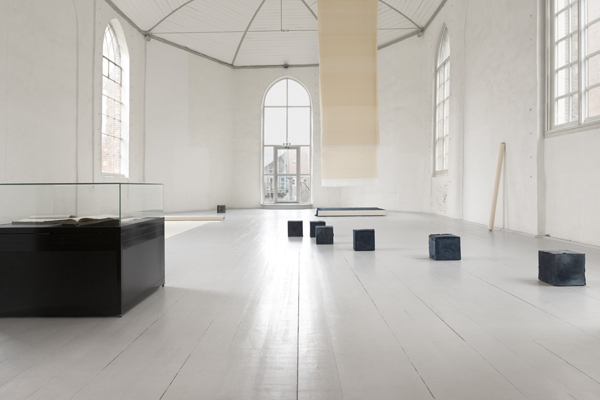
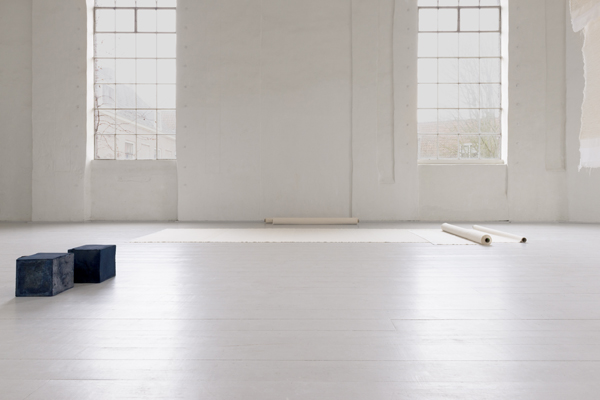
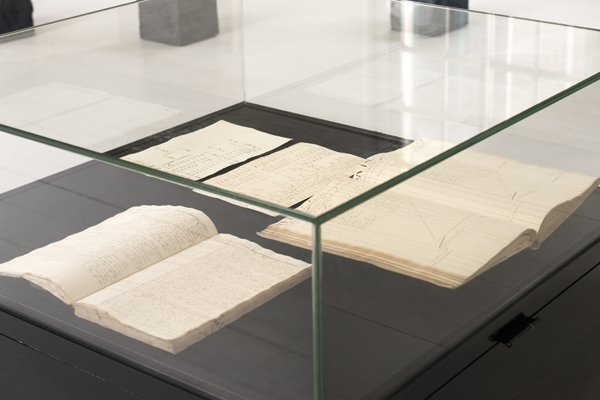
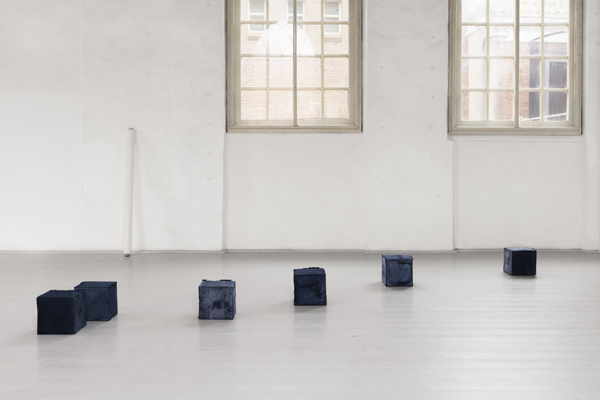
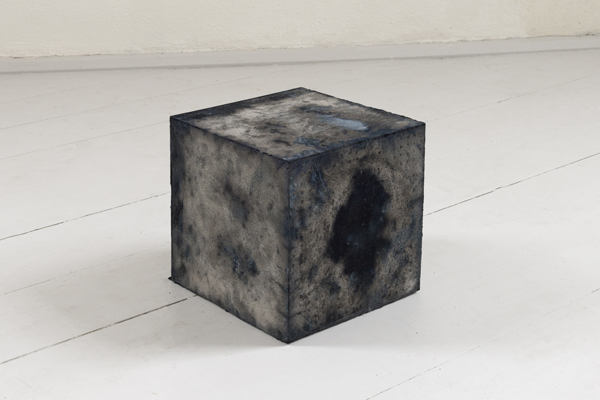
The work Return consists of a series of abstract sculptures of compressed indigo pigment based on the coordinates of the slave ship Vrouw Johanna Cores. One indigo sculpture will be created for each of the positions recorded in the ship’s log during her fourth voyage. The first examples of these are shown at Hotel Maria Kapel. Each time the work is presented, new indigo will be imported, which – compressed into unique sculptures – will represent different coordinates each time, until the entire route of the ship has been visualised as blocks of indigo. In this way, the work creates its own chain and exposes the relationship between the logic of historical trade operations and the contemporary chain of production and presentation within the network of the international art world.
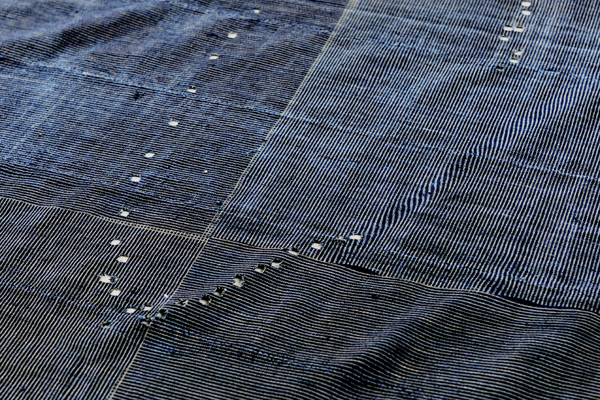
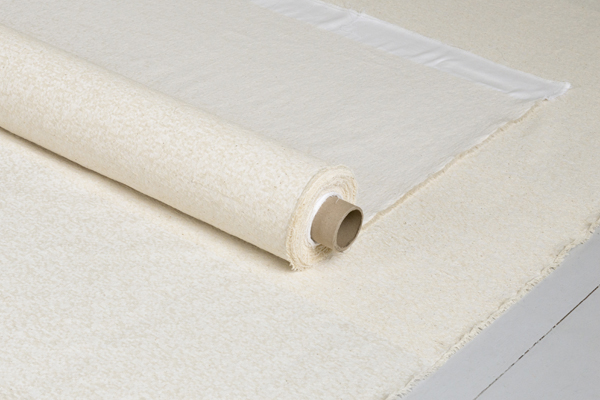
The works in the series Guinea derive their form from digitized logbook data that have been converted into weaving patterns. The fabrics are woven from unbleached cotton yarn spun by hand in India. Each fabric in the series is unique and is based on the logs of one of the slave ships from the fleet of the MCC. The combination of digital data and processes with the materiality of the raw cotton results in a fabric that is visibly a hybrid of craft and digital processes. The transfer of binary data to the woven fabric is so exact that the fabric can be seen as a form of data storage.
With the exhibition, Vulsma examines the consequences of capitalist logic and uses contemporary technological means to carry out the modern methods of quantification and abstraction to an extreme. The modern visual language used to condense the routes and translate them into works in an exhibition space implies a history of violence in which also art – as an expression of this same modernity – is complicit.
Exhibition from January 19 till February 24, 2018.
Made possible by Mondriaan Fonds, gemeente Hoorn, Amsterdams Fonds voor de Kunst and Prins Bernhard Cultuurfonds