Deprecated: Creation of dynamic property WP_Term::$cat_ID is deprecated in /home/undercurrents.nl/web/undercurrents.nl/public_html/wp-includes/category.php on line 378
Deprecated: Creation of dynamic property WP_Term::$category_count is deprecated in /home/undercurrents.nl/web/undercurrents.nl/public_html/wp-includes/category.php on line 379
Deprecated: Creation of dynamic property WP_Term::$category_description is deprecated in /home/undercurrents.nl/web/undercurrents.nl/public_html/wp-includes/category.php on line 380
Deprecated: Creation of dynamic property WP_Term::$cat_name is deprecated in /home/undercurrents.nl/web/undercurrents.nl/public_html/wp-includes/category.php on line 381
Deprecated: Creation of dynamic property WP_Term::$category_nicename is deprecated in /home/undercurrents.nl/web/undercurrents.nl/public_html/wp-includes/category.php on line 382
Deprecated: Creation of dynamic property WP_Term::$category_parent is deprecated in /home/undercurrents.nl/web/undercurrents.nl/public_html/wp-includes/category.php on line 383
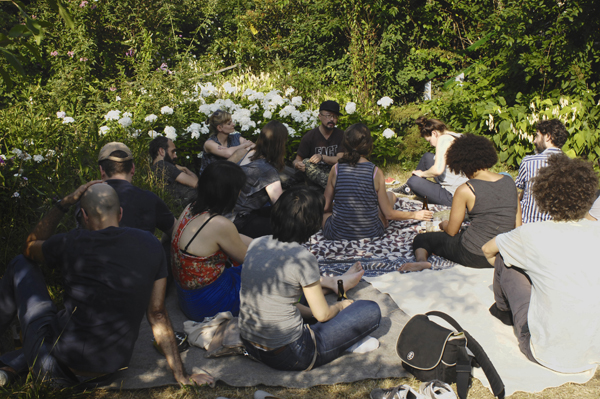
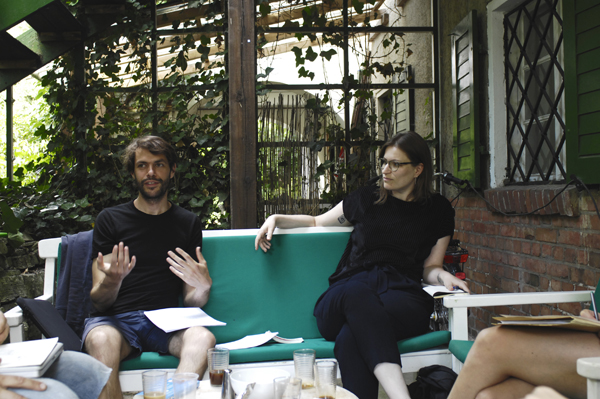
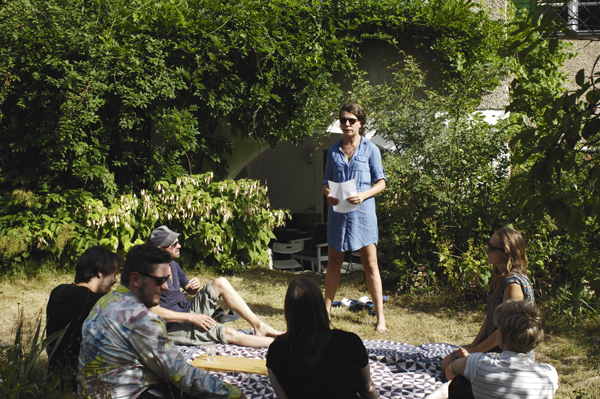
An important inspiration for the immersion into the questions during common-place was the writings of poet and philosopher Édouard Glissant (1928-2011) – in particular his concept of the ‘poetics of relation’. His book with the same title defines poetics not just as poetry, but as a way of imagining, living, and acting upon the world and translation as relation. One of the guiding principles in Glissant’s thinking is the concept of opacity: the opposition to transparency, the untranslatable and unknowable that Glissant sees as a way to challenge and subvert systems of power. Glissant demands a ‘right to opacity’ and calls for an understanding and accepting of difference without measuring this difference to an ‘ideal scale’, comparing it or making judgments. The encounter in Berlin was therefore envisioned as a ‘common-place’ in Glissant’s terms. For Glissant, common-places (lieu-commun) are not preconceived opinions, but, places where one idea about the world meets another one. Places, where a thought about the world is confirmed by another thought about the world.
As well as a study of Glissant’s thinking, the project is an attempt to conceive of possible ways of working collectively and reimagining the process of exhibition making. Commonplace was the first tentative step towards a public presentation to be opened at Hotel Maria Kapel in Hoorn in the beginning of September 2018.
Participants: Rachel Alliston, Tomás Bartoletti, Rob Blake, Season Butler, Irene de Craen, Raphaël Grisey, Judith Lavagna, David Magnus, Mahony, Gerald Mandl, Luz Peuscovich, Esper Postma, Jerop Seurei, Sári Stenczer, Aiko Tezuka, Jasmijn Visser, Bruno Watara, Leo Zhao
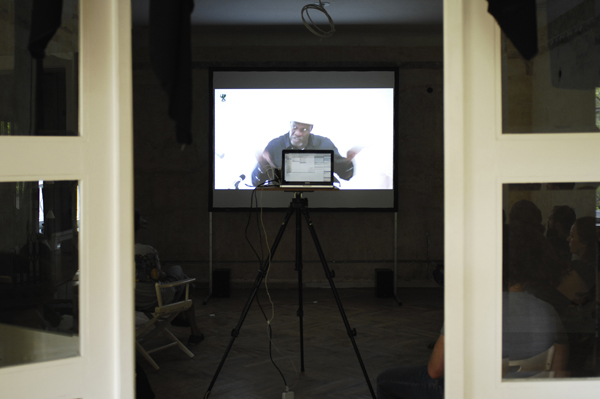
Read the full text version of one of the lectures given by Leo Zhao here.
Deprecated: Creation of dynamic property WP_Term::$cat_ID is deprecated in /home/undercurrents.nl/web/undercurrents.nl/public_html/wp-includes/category.php on line 378
Deprecated: Creation of dynamic property WP_Term::$category_count is deprecated in /home/undercurrents.nl/web/undercurrents.nl/public_html/wp-includes/category.php on line 379
Deprecated: Creation of dynamic property WP_Term::$category_description is deprecated in /home/undercurrents.nl/web/undercurrents.nl/public_html/wp-includes/category.php on line 380
Deprecated: Creation of dynamic property WP_Term::$cat_name is deprecated in /home/undercurrents.nl/web/undercurrents.nl/public_html/wp-includes/category.php on line 381
Deprecated: Creation of dynamic property WP_Term::$category_nicename is deprecated in /home/undercurrents.nl/web/undercurrents.nl/public_html/wp-includes/category.php on line 382
Deprecated: Creation of dynamic property WP_Term::$category_parent is deprecated in /home/undercurrents.nl/web/undercurrents.nl/public_html/wp-includes/category.php on line 383
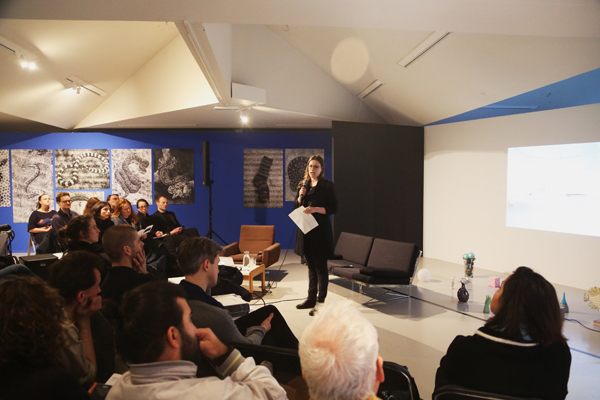
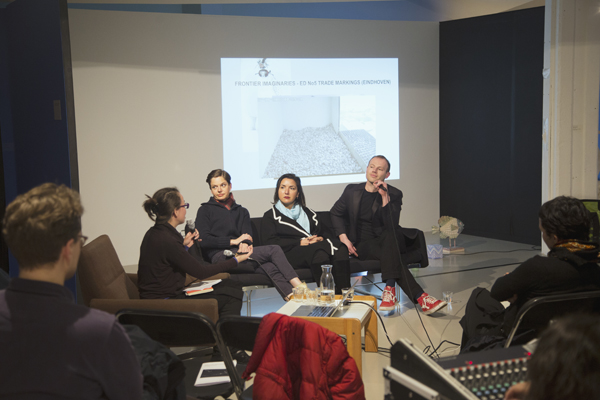
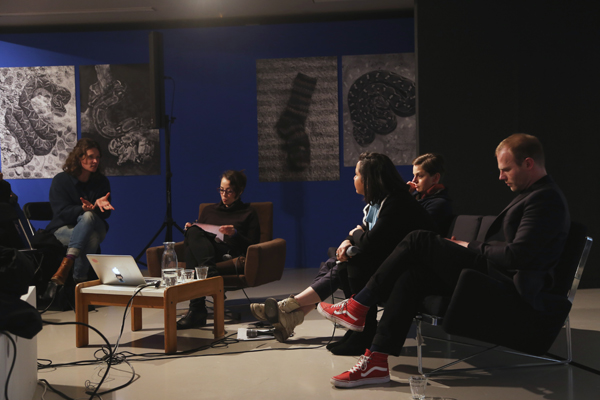
The focus of this event is on the project In the Hold by visual artist Vincent Vulsma, which will be the first exhibition at HMK as part of the Undercurrents programme. In the Hold is based on the trade in tropical indigo and textiles, for which Vulsma researched the logistical systems of 17th and 18th century Dutch trading companies. The routes that the indigo followed in colonial times played an important role in the formation of the ‘modern’ world and the history of globalisation. By taking this project as a starting point, the speakers of this event respond to the entanglement of the infrastructures of culture and labour and unequal power structures within the colonial past, as well as the complicity of the cultural field in reproducing these infrastructures.
The primary focus of Vincent Vulsma’s practice is the assessment of the tensions between the so-called autonomy of artworks and the socio-economical processes that are concerned with their production. Vulsma is interested in the different relations underlying artistic production, such as the unequal division of labour and forms of trade that precede the making of an artwork. In addition he studies how strategies in contemporary cultural and artistic production are dominated by the logic of financial capitalism. In his presentation at Framer Framed Vulsma will elaborate on the abovementioned project In the Hold. To what extent can the colonial philosophy of early modern logistical systems in the world-wide trade be traced back in the fundaments of the logistics of our current capitalist system? And which role do these systems of global exchanges play in the formation of contemporary artistic labour?
Our second speaker is art historian Lora Sariaslan, previously curator at Istanbul Museum of Modern Art, and she is currently pursuing her PhD at the University of Amsterdam. Her research at the UvA focuses on the transnational and hyphenated identities of visual artists within the European context. Her presentation deals with the positioning and symbolic authority of the Rijksakademie van Beeldende Kunsten, one of the main destinations of artistic mobility in Amsterdam. Can we consider the Rijksakademie as a power broker in the artistic arena? Or even a contemporary ‘colonial’ power in its own right? Focusing on the foundation, history, and unique evolution of this institution, her presentation will query how an artist-in-residence can take on role(s) that do not only shape the careers of its residents but also turn into a brand for the city and nation.
Our last speaker, Vivian Ziherl, is founding director of art and research initiative Frontier Imaginaries, and a PhD candidate at Monash University with external supervisor Denise Ferreira da Silva. Ziherl’s presentation will reflect upon Vulsma’s interest in the relations of trade and production through the forthcoming Frontier Imaginaries EdNo.5 Handelsmerken (Trade Markings). This project asks how the notion of ’the frontier’ may be conceptualised from the perspective of the Netherlands. Thinking in particular from Noord Brabant, the research has divulged three ciphers marking the realms of three distinct global eras – the falcon, the cigar, and the computer chip. Through these eras, the talk will follow the centuries-old push and pull of trade marking and liquidity—the opacity of property and the transparency of exchange. Frontier Imaginaries Ed. No.5 Handelsmerken will open at the Van Abbemuseum April 7th.
The discussion following the presentations will be moderated by Nat Muller. Nat Muller is an independent curator and critic based in Amsterdam. Her main interests include: the intersections of aesthetics, media and politics; media art, food and contemporary art in and from the Middle East. She is a regular contributor to Springerin, MetropolisM. Her writing has been published amongst others in Bidoun, ArtAsiaPacific, Art Papers, Hyperallergic, Canvas, X-tra, The Majalla, Art Margins and Harper’s Bazaar Arabia.
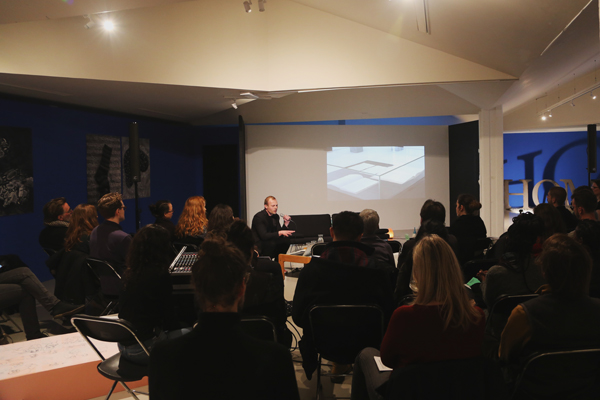
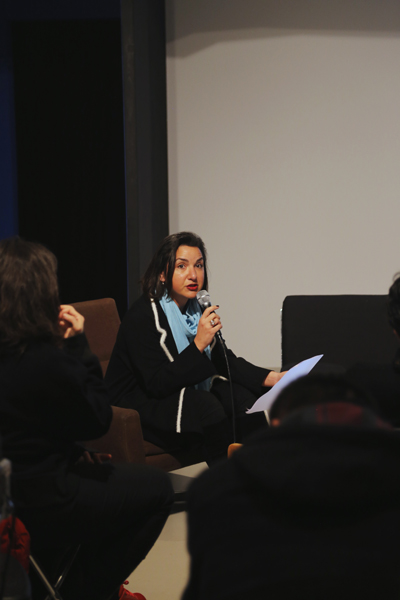
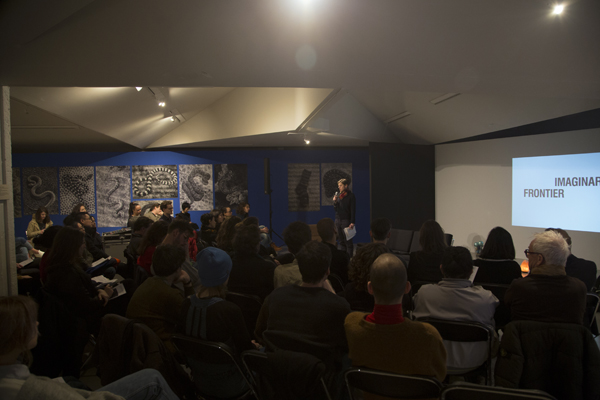
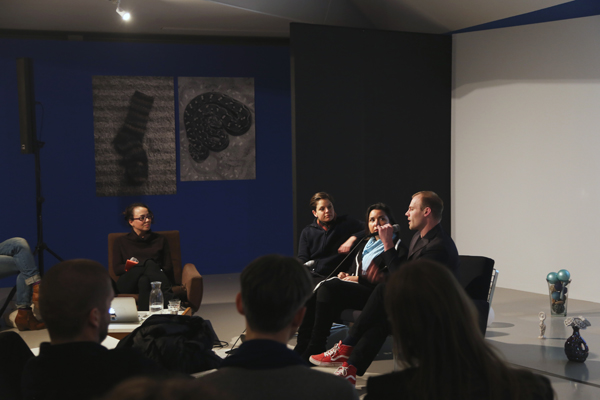
Featured image: Vincent Vulsma, Voyage #7, 2017 (detail) Vintage Pondicherry (India) indigo cloth, hand spun and hand woven, laser etched and laser cut. 122 x 233 cm
Event photography by Sanna Gertenbach
]]>